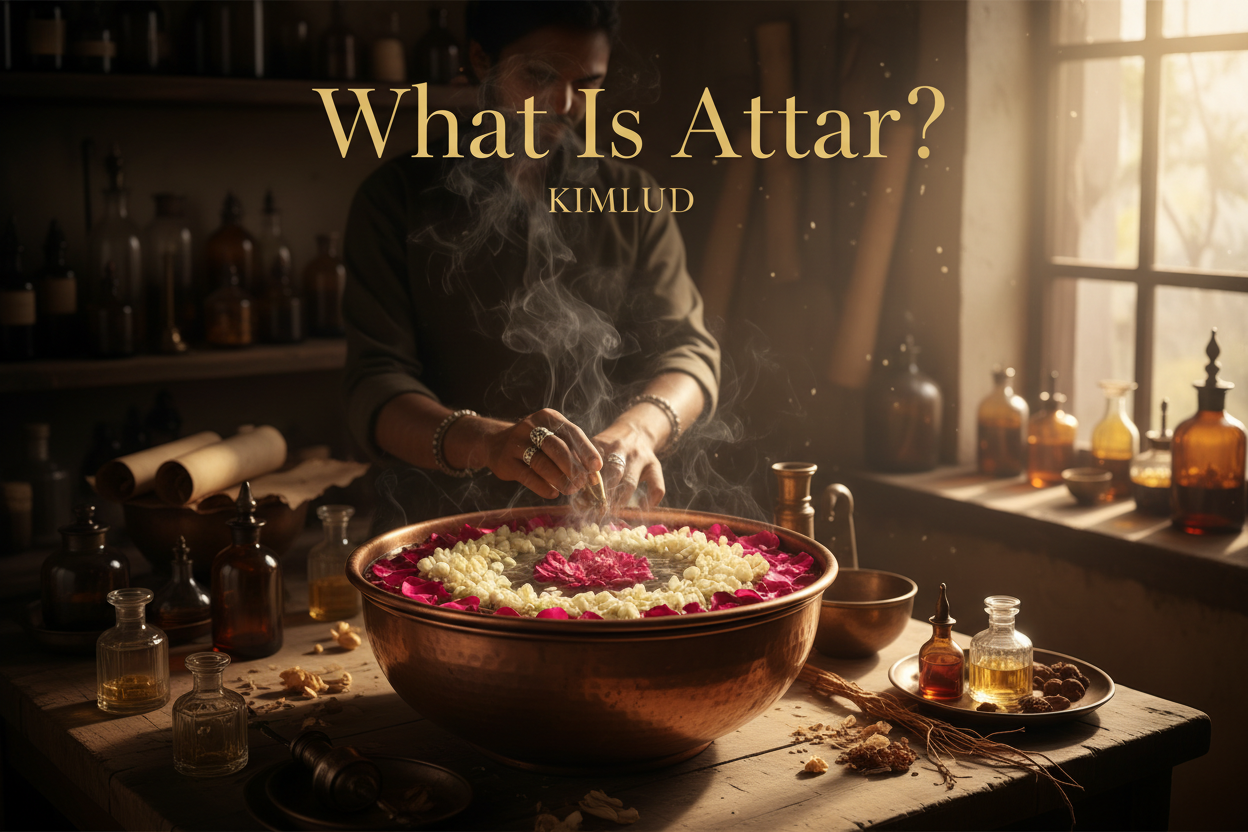
What Is Attar? The Ancient Art of Natural Perfume Oils
What Is Attar? The Ancient Art of Natural Perfume Oils
For thousands of years, attar has been the fragrance of royalty, spirituality, and sensory luxury. Discover the world's oldest perfume tradition.
Explore KIMLUD Fragrances
Table of Contents
What Is Attar?
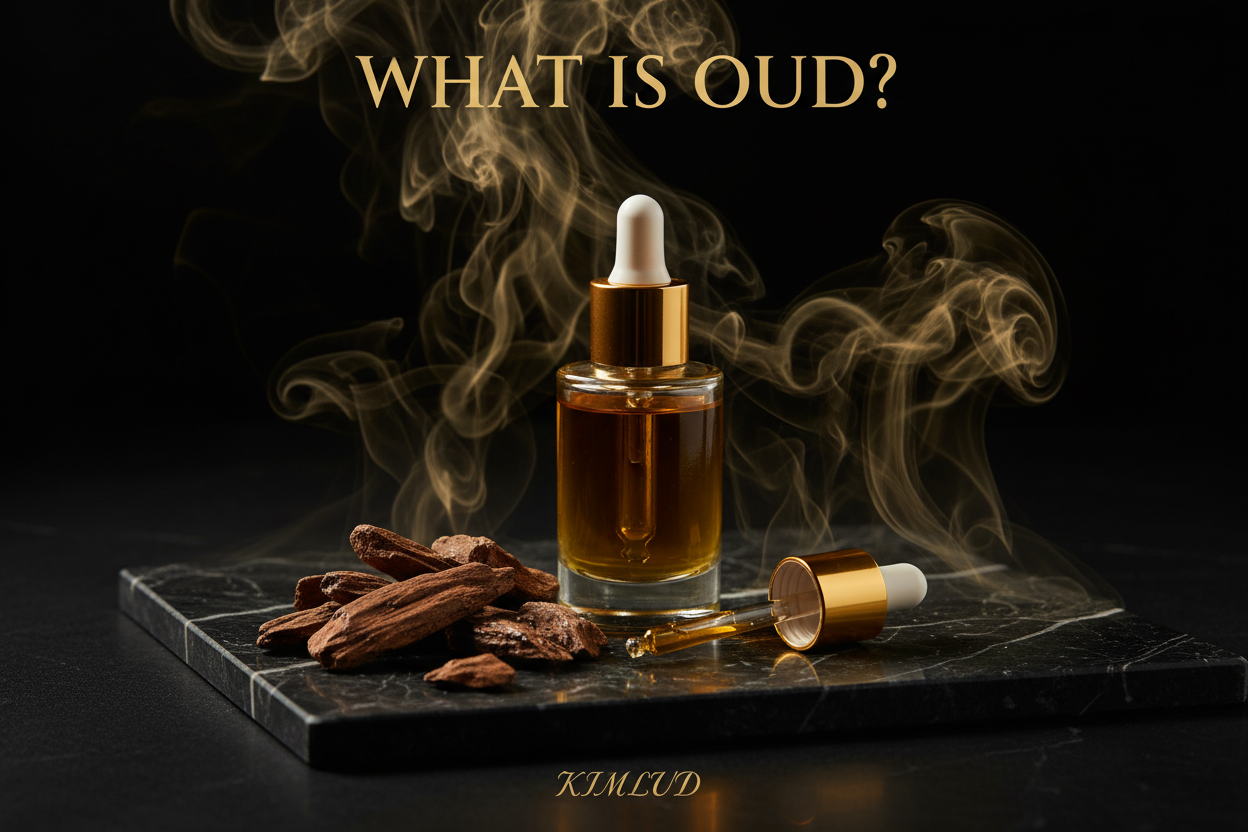
Attar — also spelled ittar or itar — is a natural perfume oil derived from botanical sources through a traditional distillation process. The word attar comes from the Arabic itr (عطر), meaning fragrance or perfume. Unlike modern alcohol-based perfumes, attars are pure, concentrated aromatic oils with no synthetic ingredients, no alcohol, and no chemical additives.
Attars are produced by distilling flowers, herbs, spices, wood, or other botanical materials into a base of sandalwood oil. The result is an extraordinarily complex, long-lasting, and deeply natural fragrance that sits close to the skin and evolves beautifully over hours of wear.
The Ancient History of Attar

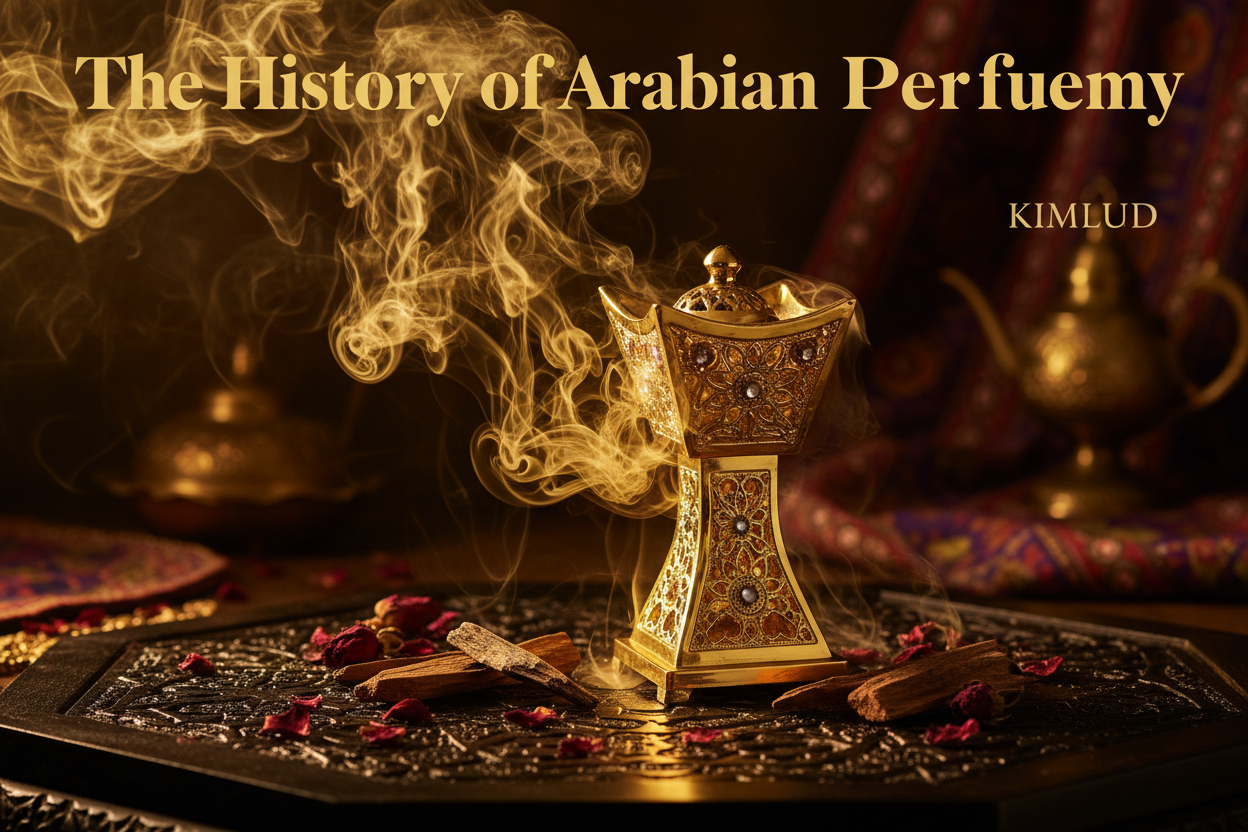
The history of attar is inseparable from the history of human civilization itself. Archaeological evidence suggests that aromatic oils were being produced and traded in the Indus Valley Civilization as early as 3000 BCE. The Mughal emperors were among the greatest patrons of attar in history. Emperor Akbar maintained a vast perfume treasury, and Nur Jahan is credited with the discovery of rose attar.
The Persian physician Avicenna (Ibn Sina, 980–1037 CE) refined the distillation process that made modern attar production possible, allowing extraction of essential oils with far greater purity and efficiency.
How Attar Is Made: The Deg and Bhapka Method
The traditional method of attar production used in Kannauj is known as the deg and bhapka method — a hydro-distillation process recognized by UNESCO as an intangible cultural heritage of humanity.
| Stage | Equipment | Process | Duration |
|---|---|---|---|
| Loading | Deg (copper still) | Fresh botanicals + water added | 1–2 hours |
| Distillation | Deg + bamboo pipe | Heated over wood fire, steam rises | 6–12 hours |
| Condensation | Bhapka (receiver) | Steam condenses into sandalwood base | Continuous |
| Separation | Bhapka | Water removed, oil retained | 1–2 hours |
| Maturation | Leather bottles (kuppi) | Attar aged to develop complexity | Months to years |
Types of Attar

| Type | Character | Examples | Best Season |
|---|---|---|---|
| Floral Attar | Delicate, romantic, feminine | Rose, Jasmine, Mogra, Champak | Spring/Summer |
| Woody Attar | Deep, grounding, meditative | Oud, Sandalwood, Cedarwood | Autumn/Winter |
| Spice Attar | Warm, exotic, stimulating | Saffron, Cardamom, Clove | Autumn/Winter |
| Earthy Attar | Petrichor, grounding, unique | Mitti (earth), Vetiver | Monsoon/Summer |
| Resinous Attar | Rich, balsamic, sacred | Frankincense, Myrrh, Benzoin | All seasons |
The World's Most Famous Attars
Rose Attar (Gulab)
Rose attar is the most celebrated attar in the world, produced from Rosa damascena petals. It takes approximately 3 to 5 tonnes of rose petals to produce just one kilogram of rose attar.
Mitti Attar (Earth)
Mitti attar is produced by distilling baked earth into a sandalwood base, perfectly capturing the scent of rain falling on dry earth — petrichor.
Shamama Attar
Shamama is a complex blended attar made from dozens of botanical ingredients — flowers, spices, herbs, and woods — distilled together into a sandalwood base.
Attar vs Modern Perfume
| Feature | Attar | Modern Alcohol Perfume |
|---|---|---|
| Base | Sandalwood oil or carrier oil | Alcohol (ethanol) |
| Ingredients | 100% natural botanicals | Natural + synthetic molecules |
| Alcohol-free | Yes | No |
| Longevity | 12–24 hours | 4–12 hours |
| Sillage | Intimate, close to skin | Stronger projection |
Kannauj: The Perfume Capital of India

Kannauj, on the banks of the Ganges in Uttar Pradesh, has been the center of Indian perfumery for over 5,000 years. Known as the Grasse of the East, it is home to hundreds of traditional attar distilleries, many operated by the same families for generations. The traditional deg and bhapka distillation method used in Kannauj is protected by Geographical Indication (GI) registry of India.
How to Wear Attar
- Apply with a rollerball or fingertip: Dab a small amount directly onto pulse points — wrists, neck, behind the ears.
- Use sparingly: A single drop on each pulse point is typically sufficient for a full day.
- Do not rub: Simply dab and allow to dry naturally.
- Layer with intention: Apply a woody attar first as a base, then add a floral attar on top.
- Store correctly: Keep in a cool, dark place. Properly stored attars can last for decades.
Attar and Spirituality
In Islam, the use of natural fragrance is considered a sunnah — a practice recommended by the Prophet Muhammad — and alcohol-free attars are the preferred fragrance for observant Muslims. In Hinduism, fragrant oils are offered to deities in temple rituals. In Sufism, fragrance is understood as a bridge between the material and spiritual worlds.
Frequently Asked Questions About Attar
What is the difference between attar and perfume?
Attar is a pure, alcohol-free natural perfume oil produced through traditional distillation, while modern perfume is typically alcohol-based and may contain synthetic ingredients.
Is attar alcohol-free?
Yes. Traditional attars are completely alcohol-free, making them suitable for those who avoid alcohol for religious, health, or personal reasons.
How long does attar last on skin?
High-quality attars typically last 12 to 24 hours on skin, significantly longer than most alcohol-based perfumes.
What is mitti attar?
Mitti attar is produced by distilling baked earth into a sandalwood base, capturing the scent of rain on dry earth (petrichor).
Can attar be worn by both men and women?
Absolutely. Many traditional attars are unisex — the concept of gendered fragrance is largely a modern Western construct.
Continue Reading: KIMLUD Fragrance Authority Series
References & Further Reading