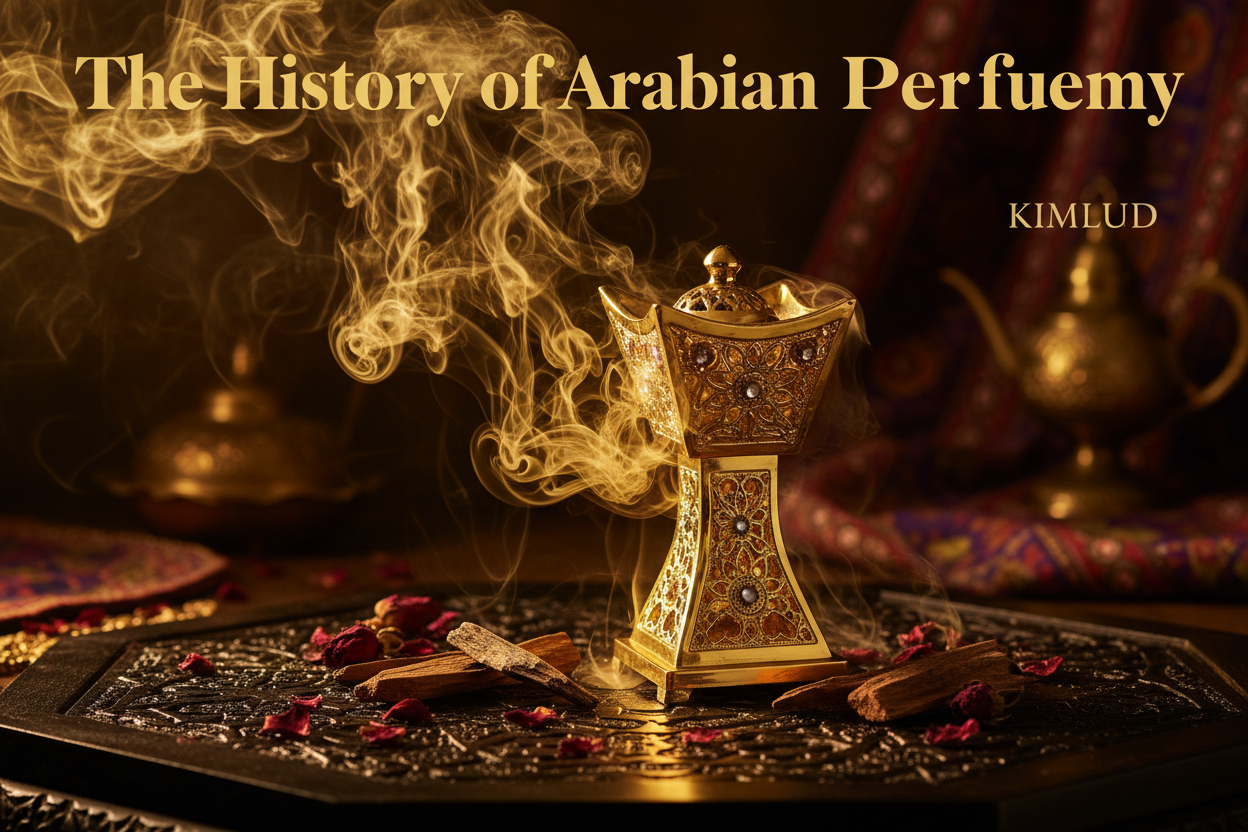
The History of Arabian Perfumery
The History of Arabian Perfumery
From ancient incense routes to the world's most sophisticated fragrance culture — the extraordinary story of Arabian perfumery across five millennia.
Explore KIMLUD FragrancesTable of Contents
- Ancient Origins: The Incense Trade
- The Islamic Golden Age and Avicenna
- The Great Arabian Fragrance Ingredients
- Bakhoor: The Art of Incense
- Oud Culture in the Arabian Peninsula
- The Taif Rose
- The Fragrance Trade Routes
- Modern Arabian Perfumery
- Fragrance in Gulf Culture Today
- Arabian Influence on Western Perfumery
- Frequently Asked Questions
Ancient Origins: The Incense Trade
The story of Arabian perfumery begins with incense — specifically, with the extraordinary trade in frankincense and myrrh that made the Arabian Peninsula one of the most strategically important regions in the ancient world. For over 3,000 years, from approximately 1000 BCE to 300 CE, the Incense Route — a network of overland and maritime trade paths stretching from the frankincense-producing regions of southern Arabia (modern-day Yemen and Oman) and the Horn of Africa to the Mediterranean world — was one of the most lucrative trade networks in human history.
Frankincense (Boswellia sacra) and myrrh (Commiphora myrrha) were among the most valuable commodities in the ancient world, prized by Egyptians, Greeks, Romans, Persians, and Hebrews alike for their use in religious ritual, medicine, and personal fragrance. The kingdoms that controlled the production and trade of these resins — particularly the Sabaean kingdom of ancient Yemen and the Nabataean kingdom centered at Petra — accumulated extraordinary wealth.
The Islamic Golden Age and Avicenna
The rise of Islam in the 7th century CE transformed the fragrance culture of the Arabian world. The Prophet Muhammad's well-documented love of fragrance gave perfumery a spiritual dimension in Islamic culture that it retains to this day. The use of natural fragrance became a religious practice, a sunnah (recommended act), and the development of alcohol-free perfume oils was driven in part by Islamic prohibitions on alcohol.
The Islamic Golden Age (8th to 14th centuries CE) was a period of extraordinary intellectual achievement that transformed the art and science of perfumery. The most important figure was the Persian polymath Ibn Sina — known in the West as Avicenna (980–1037 CE). Avicenna's refinement of the alembic still allowed for the extraction of essential oils with unprecedented purity. He is credited with producing the first true rose water through steam distillation, a product that became one of the most important fragrance ingredients in both Islamic and European culture.
The Great Arabian Fragrance Ingredients
| Ingredient | Source | Character | Historical Significance |
|---|---|---|---|
| Oud (Agarwood) | Southeast Asia, India | Deep, woody, resinous, animalic | Sacred in Islamic tradition, traded for millennia |
| Taif Rose | Taif, Saudi Arabia | Rich, honeyed, slightly spicy | The most prized rose in Arabian perfumery |
| Frankincense | Oman, Yemen, Somalia | Resinous, citrusy, sacred | Foundation of ancient incense trade |
| Myrrh | Somalia, Ethiopia, Arabia | Bitter, balsamic, earthy | Ancient medicine and ritual |
| Ambergris | Sperm whale secretion | Sweet, musky, oceanic | Among the most expensive natural ingredients |
| Musk | Musk deer (now synthetic) | Warm, animalic, sensual | Foundation note in Arabian compositions |
| Saffron | Iran, Kashmir | Spicy, leathery, honeyed | Luxury spice used in perfumery and cuisine |
| Sandalwood | India, Australia | Creamy, woody, milky | Classic base for attar and Arabian blends |
Bakhoor: The Art of Incense
Bakhoor is one of the most distinctive fragrance traditions of the Arabian world. The word bakhoor refers to wood chips — typically agarwood — soaked in fragrant oils and blended with other aromatic ingredients including rose water, musk, amber, sandalwood, and spices. The mixture is burned on charcoal in an ornate incense burner called a mabkhara, releasing a rich, complex fragrance that perfumes the home, clothing, and hair.
In Arabian culture, bakhoor is far more than a pleasant fragrance — it is a ritual of hospitality and a mark of social status. When guests arrive at an Arabian home, it is traditional to pass the mabkhara around so that each guest can hold it under their clothing and allow the fragrant smoke to perfume their garments. This practice — known as tadkheen — is considered one of the highest expressions of Arabian hospitality.
Oud Culture in the Arabian Peninsula
No ingredient is more central to Arabian fragrance culture than oud. In the Gulf states — Saudi Arabia, the UAE, Kuwait, Qatar, Bahrain, and Oman — oud is not merely a fragrance ingredient but a cultural institution and a marker of identity. Connoisseurs distinguish between ouds from different geographic origins — Hindi (Indian), Cambodi (Cambodian), Malaki (Malaysian) — with the same precision that wine experts apply to vintages. The finest wild Hindi oud commands prices exceeding $50,000 per kilogram.
The Taif Rose: Arabia's Most Precious Flower
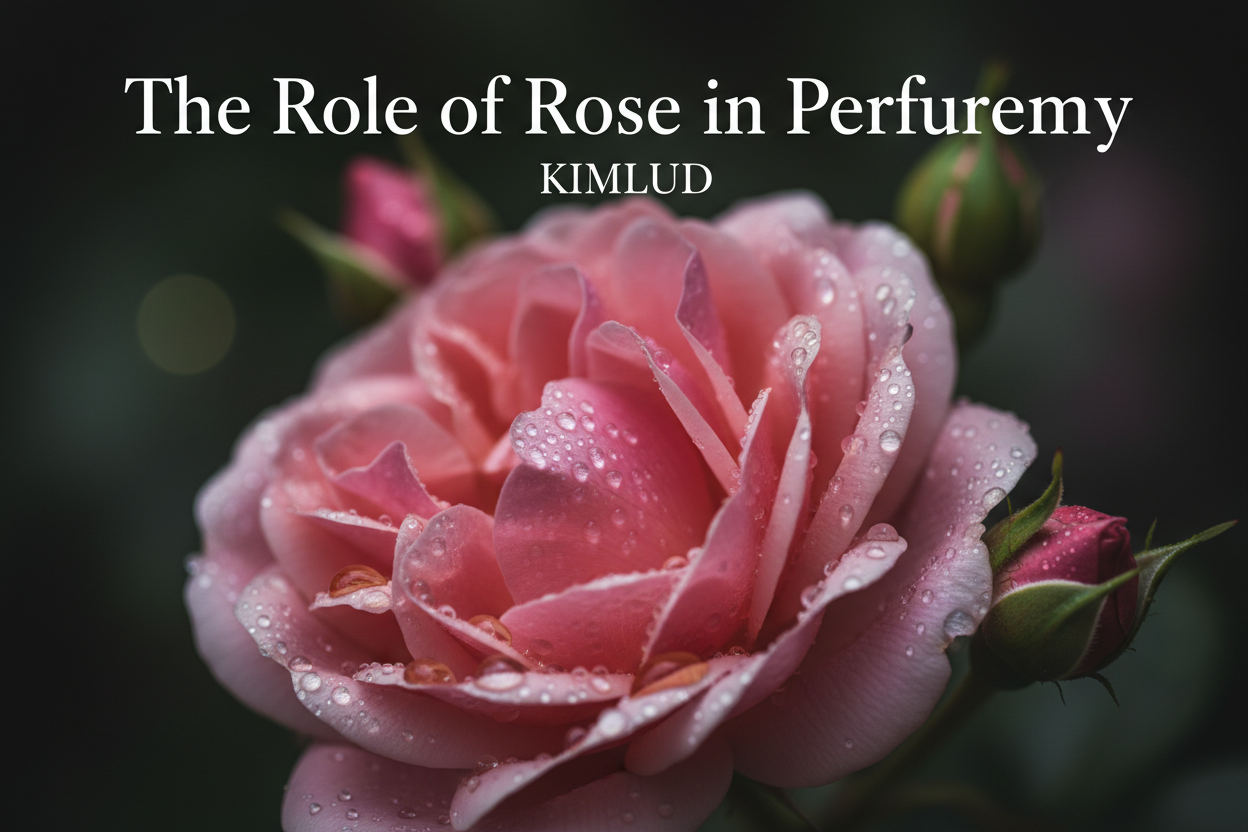
Grown in the mountains around Taif, Saudi Arabia, at approximately 1,800 meters altitude, the Taif rose (Rosa damascena) is considered by many connoisseurs to be the finest rose in the world for perfumery. The harvest season lasts just three to four weeks each year, typically in March and April. Workers harvest the roses by hand before sunrise, when aromatic compounds are most concentrated. It takes approximately 10,000 roses to produce just one tola (12ml) of Taif rose oil, making it one of the most expensive natural fragrance ingredients in the world.
The Fragrance Trade Routes
| Route | Period | Key Ingredients | Major Centers |
|---|---|---|---|
| Incense Route (overland) | 1000 BCE – 300 CE | Frankincense, myrrh | Petra, Gaza, Alexandria |
| Maritime Spice Route | 100 BCE – 1500 CE | Oud, sandalwood, spices | Aden, Hormuz, Calicut |
| Silk Road | 200 BCE – 1450 CE | Musk, amber, rose water | Samarkand, Baghdad, Constantinople |
| Indian Ocean Trade | 800 – 1800 CE | Oud, attar, spices | Muscat, Zanzibar, Calicut |
Modern Arabian Perfumery
The 20th and 21st centuries have seen Arabian perfumery evolve from a traditional craft into a global luxury industry. Arabian fragrance houses — including Abdul Samad Al Qurashi, Amouage, Arabian Oud, Ajmal, and Rasasi — have built international reputations for fragrances of extraordinary quality rooted in Arabian tradition. Amouage, founded in Oman in 1983 by the Sultan of Oman, is perhaps the most internationally celebrated Arabian fragrance house, sold in luxury department stores worldwide.
Fragrance in Gulf Culture Today
In the contemporary Gulf states, fragrance remains one of the most important elements of personal presentation and social identity. A typical fragrance routine might involve: applying oud oil directly to the skin in the morning; using bakhoor to perfume clothing before leaving the house; wearing a luxury EDP as the primary fragrance; and carrying rose water for refreshment throughout the day. This layered approach creates a complex, multi-dimensional scent signature that is uniquely Arabian.
Arabian Influence on Western Perfumery
The influence of Arabian perfumery on the Western fragrance world has been profound and growing. The introduction of oud to Western perfumery in the early 2000s — pioneered by Tom Ford, Dior, and Maison Francis Kurkdjian — opened Western consumers to a new dimension of fragrance complexity. Today, oud is one of the most popular ingredients in the global luxury market. Beyond oud, Arabian perfumery has influenced Western culture through its emphasis on richness, longevity, precious natural ingredients, and the understanding of fragrance as cultural expression.
Frequently Asked Questions
What makes Arabian perfumery unique?
Arabian perfumery is characterized by its use of rich, precious natural ingredients (oud, rose, frankincense, amber, musk), its emphasis on longevity and intensity, its tradition of layering multiple fragrances, and its deep connection to cultural identity and spiritual practice.
What is bakhoor?
Bakhoor is traditional Arabian incense made from agarwood chips soaked in fragrant oils, burned on charcoal in a mabkhara to perfume the home and clothing.
Who is Avicenna and why is he important to perfumery?
Avicenna (Ibn Sina, 980–1037 CE) was a Persian polymath who refined the distillation process that made modern perfumery possible, credited with developing steam distillation and producing the first true rose water.
What is the Taif rose?
The Taif rose is a variety of Rosa damascena grown in the mountains around Taif, Saudi Arabia, considered one of the finest roses in the world for perfumery, producing an extraordinarily rich, honeyed rose oil central to Arabian fragrance culture.