Quiet Luxury, Reimagined: Ten Neutral Looks Built on Texture and Ease
Quiet Luxury, Reimagined
Ten considered outfit ideas built around soft neutrals, tactile contrast, and the art of getting dressed with ease.
📋 TABLE OF CONTENTS
- A note on these looks
- The language of a considered outfit
- Look 1: Cashmere and satin
- Look 2: Silk, wool, and bouclé
- Look 3: Camel merino and pleats
- Look 4: Poplin, linen, and cream tailoring
- Look 5: Blush knit and velvet
- Look 6: Linen tailoring and satin trousers
- Look 7: Cable knit and suede
- Look 8: Sage silk and soft wool
- Look 9: Stripes, suede, and a light trench
- Look 10: Ivory wool and terracotta satin
- Make the formulas your own
- Build a useful wardrobe from the formulas
- Choose a calm color story
- Balance length, volume, and movement
- Edit accessories with intention
- Layer for real days and changing weather
- Read fabric details and care labels
- Shift each look for different occasions
- Use a practical try-on checklist
- Shop thoughtfully when a gap remains
- Frequently asked questions
- A quieter kind of statement
- Sources & References
A note on these looks
This look-led editorial explores ten outfit ideas through soft neutrals, tactile contrast, and practical styling choices. Each look is a starting point for combining color, texture, and proportion. Adapt the ideas to your own comfort and routine, and use verified product details when choosing garments.
The shared thread is not a strict uniform or a list of rules. It is a way of combining familiar wardrobe shapes with tactile contrast and a restrained palette. A soft knit can make a smooth skirt feel more relaxed; a crisp shirt can bring definition to fluid trousers; a long outer layer can make a simple base feel intentional. The point is not to own every item shown. It is to notice the styling decisions, then translate one or two of them into what you already wear.
The language of a considered outfit
When an outfit looks polished without looking overworked, the result usually comes from relationships between pieces rather than from one dramatic item. Consider how a fabric reflects light beside another fabric, how a loose shape meets a cleaner line, or how a small accessory gives a finishing point to a quiet palette. These relationships can be repeated with many different garments, which is why an outfit formula is more useful than a shopping list.
Begin with one anchor. It might be a flowing skirt, a tailored trouser, a fine knit, or a clean shirt. Add a second piece that brings contrast rather than simply matching the first: matte beside sheen, soft beside crisp, structured beside fluid. Keep the color story coherent by repeating a tone once, perhaps in a belt, shoe, scarf, or bag. Repetition gives the eye a path through the outfit, while variation in texture keeps the result from feeling flat.
Fit matters more than labels. A wide-leg trouser should fall cleanly from the hip and work with the shoes you intend to wear. A long coat should allow comfortable movement over the layers beneath it. A scarf should sit securely without swallowing the neckline. These are practical checks, not rules about body type. Clothes should let the wearer move, sit, walk, and live comfortably. If a look is beautiful but awkward to wear, adjust the proportion until it feels like yours.
Color can stay quiet without becoming bland. Cream, taupe, cocoa, camel, navy, blush, and sage each bring a different temperature. Put two or three together, then use a deeper shade to ground the arrangement. A tonal outfit does not require every item to be the same color. It often looks more dimensional when neighboring shades differ slightly, allowing the eye to register layers and texture.
Finally, styling is a form of editing. Before adding another accessory, ask what role it would play. Does it repeat a color, clarify the silhouette, or add a texture that is currently missing? If it does none of those things, leave room around the outfit. A little negative space is part of the composition, whether that means an open neckline, a visible waist, a clean hem, or simply choosing one expressive accessory instead of several.
Look 1: Cashmere and satin

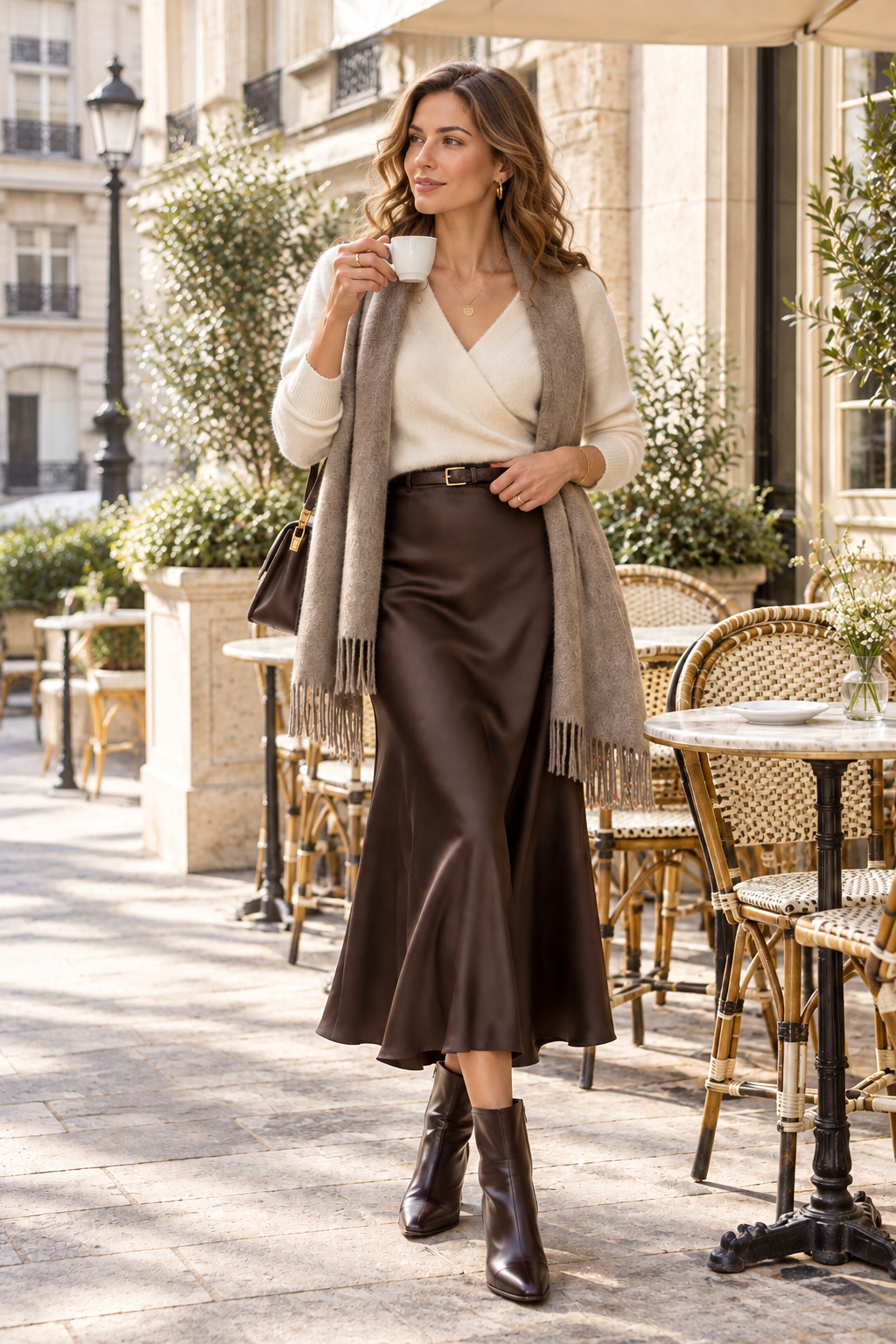
The first look pairs an ivory wrap-style knit with a chocolate-colored satin skirt and a long, softly draped scarf. The visual interest comes from the meeting of surfaces: the knit reads as soft and matte, while the skirt catches light as it moves. The deep brown gives the pale upper half a grounded counterpoint. Rather than relying on a busy print, the outfit uses a clear change in texture to make a simple palette feel considered.
To adapt the idea, choose a top that sits neatly at the waist or can be tucked without bulk. A wrap neckline, a fine crewneck, or a slim cardigan can all work, depending on comfort and the shape of the skirt. If the top is loose, a defined waist can help the silhouette feel balanced. If the knit is close-fitting, keep the skirt fluid enough to move freely. The best pairing is the one that allows both pieces to drape naturally rather than forcing one into a shape it was not made to hold.
A scarf can repeat the top's light tone, echo the skirt's brown, or sit between them in a warm taupe. Let it fall in a way that does not obscure the waistline or crowd the neckline. For a more casual version, switch heeled shoes for a clean ankle boot or flat. For an evening variation, keep the same tonal relationship and choose a slightly more refined shoe. The formula remains intact even when the exact pieces change.
Care deserves attention when combining delicate materials. Check each garment's own label rather than assuming a fabric can be washed or steamed in a particular way. Store a knit folded if its construction is prone to stretching, and hang a skirt in a way that preserves its shape. When different fibers are combined, use the care method suited to each individual piece. A thoughtful outfit includes keeping the garments in good condition, not just putting them together.
Look 2: Silk, wool, and bouclé

Here, a champagne-toned blouse sits beneath a cream bouclé jacket, with charcoal wide-leg trousers bringing definition to the lower half. Each piece has its own visual character, but the palette ties them together. The blouse provides a light-catching center, the jacket adds texture, and the trousers create a crisp vertical line. The outfit feels composed because the silhouette is clear: a shorter outer layer above a longer, flowing trouser.
When building a similar combination, pay attention to where the jacket ends relative to the rise of the trouser. A cropped or waist-length layer often works naturally with a higher waist, while a longer jacket can be worn open over a straighter trouser. There is no single ideal proportion; the useful question is whether the garment lengths make sense together and allow easy movement. Try the outfit with the shoes you expect to wear, because the hem length changes the impression of a wide leg.
Silk-like sheen can be introduced through a blouse, a scarf, or another soft layer. If you do not own a silk piece, a different smooth fabric can create a similar visual contrast. The material name alone does not determine how an outfit looks, and it should never be guessed from appearance. Read product details for exact fiber information and care instructions, and make the styling decision based on the garment you actually have.
Charcoal is a helpful alternative to black when you want definition with a softer edge. It works with cream, ivory, camel, blush, and many muted shades. To bring the look closer to everyday wear, replace the structured jacket with a cardigan or simple blazer. To make it more formal, keep the clean lines and choose a shoe that complements the trouser's hem. One tactile statement is enough; the remaining pieces can stay uncomplicated.
Look 3: Camel merino and pleats

This look begins with a warm camel knit and an ivory pleated skirt. A long, light-colored outer layer adds movement without changing the quiet character of the base. The palette moves gently from warm to pale, while the pleats introduce rhythm whenever the wearer walks. The outfit demonstrates how a restrained color story can still feel dynamic when garments respond differently to movement and light.
A fine-gauge knit can work well with a pleated skirt because it provides a smoother counterpoint to the skirt's repeated folds. If the knit is bulky, consider wearing it shorter or tucking only a small section to avoid adding unnecessary volume at the waist. A belt can be useful when it supports the shape, but it is optional. The goal is a comfortable transition between top and skirt, not an artificially defined waist.
Outer layers should serve the weather and the wearer's routine. A trench-like coat can add structure over a flowing skirt, but it should leave enough room to walk and sit comfortably. If a long coat feels cumbersome, a shorter jacket or cardigan can provide a different proportion with the same color effect. Choose layers that are appropriate for the climate and that work with the weight of the pieces underneath.
A narrow scarf at the neck brings a small point of detail close to the face. Keep the pattern understated if the pleats are already visually active, or let a simple solid scarf repeat the camel or ivory. Footwear can change the mood considerably: a sleek boot feels polished, while a flat or low-profile shoe relaxes the outfit. For a cohesive finish, let one color from the outfit appear again in the shoe or bag.
Look 4: Poplin, linen, and cream tailoring

A powder-blue shirt, an oatmeal-toned textured vest, and cream trousers make a lighter, daytime interpretation of quiet dressing. The crispness of the shirt contrasts with the relaxed texture of the vest. The trouser anchors the combination without introducing a strong dark block. A small neutral bag can finish the look, but it should be sized for actual daily needs rather than added only for the image.
Shirt collars and cuffs provide an easy way to make layers feel intentional. Let a little collar show above the vest and allow the cuff to extend just enough to be visible. These details create a neat transition between fabrics. If the vest is close-fitting, make sure the shirt underneath has enough ease to avoid pulling. If both layers are relaxed, use the trouser's cleaner line to keep the overall silhouette from feeling shapeless.
Linen is often associated with a relaxed hand and a naturally textured surface, but specific garments can vary substantially. Check the product composition, construction, and care guidance rather than assuming every piece behaves the same way. If a linen layer creases during normal wear, that may be part of its lived-in character; if a very smooth appearance matters to you, choose a different material or blend based on the item details. Personal preference is a better guide than an absolute rule.
This look can shift with small choices. A different shirt color can move it toward warmer or cooler tones. A blazer can replace the vest for a more structured impression. Straight-leg jeans can make it more casual if the setting allows. The stable idea is a crisp base, one tactile mid-layer, and a trouser with a clean finish. Repeat that relationship using pieces you already own before considering a new addition.
Look 5: Blush knit and velvet

The blush knit and espresso-toned trousers create a gentle contrast between light and dark, warm and cool, soft and plush. The ivory layer underneath keeps the middle of the outfit bright. Rather than adding a strong print, the styling relies on a limited palette and the visibly different textures of the materials. A small scarf detail can add a finishing touch, especially when it repeats one of the colors already present.
For a similar outfit, use the cardigan as the flexible layer. It can be worn open to show the base, buttoned for a cleaner line, or draped over the shoulders when the temperature allows. The trousers should fall comfortably and work with the chosen footwear. If a velvet-like fabric feels too dressy for your routine, use corduroy, brushed cotton, or another textured trouser whose care and composition suit your needs. The styling logic does not depend on a particular fiber.
Blush can be treated as a neutral when it is muted and used in a small-to-medium area. It pairs naturally with cream, cocoa, taupe, and some shades of gray. If your wardrobe is mostly warm-toned, look for a blush that sits comfortably beside those colors. If it is cooler, a paler or more mauve-leaning shade may feel more coherent. Holding garments together in natural daylight can help you judge whether their undertones work for you.
Accessories should complement, not compete with, the rich texture of the lower half. A simple leather bag, a slim belt, or small earrings can be enough. If the outfit already has a scarf, avoid adding another highly textured accessory unless there is a clear reason. Quiet styling is not the absence of personality; it is the choice to let a few details speak clearly.
Look 6: Linen tailoring and satin trousers

This combination uses a light blazer, a narrow dark base, and fluid trousers with a soft sheen. The dark knit creates a visual center, while the pale jacket frames the upper half. The trousers add movement and keep the outfit from reading as a conventional matching suit. It is a useful formula for someone who enjoys tailoring but wants a less formal result.
When combining wide trousers with a blazer, the relationship between lengths is key. A jacket that ends around the hip can give a classic balance; an oversized jacket can create a relaxed column if the inner layer remains streamlined. Both can work. Check that the sleeves and shoulders allow comfortable movement and that the trouser hem does not catch under the shoe. A small adjustment in length can make the entire outfit feel more deliberate.
A black or deep charcoal base provides contrast, but it can be softened with brown shoes or a warm-toned bag. Conversely, keep accessories cool and minimal if you want the outfit to stay clean and graphic. Champagne, ivory, cream, and other pale neutrals can differ in undertone, so a coordinated outfit does not have to rely on exact matching. A slight variation can make the layers appear more natural.
For daytime, try a flat shoe or low heel and a practical bag. For an evening setting, switch only one element, such as a more refined shoe or a smaller bag, rather than rebuilding the whole outfit. Wearability remains the test: can you sit, walk, and move without adjusting the jacket or trouser constantly? A polished appearance is strongest when the outfit feels settled on the person wearing it.
Look 7: Cable knit and suede

This outfit places a textured knit over a clean white blouse and pairs them with a taupe A-line skirt. The contrast between the knit's visible construction and the shirt's crisp surface gives the upper half its character. The skirt carries the silhouette downward in a simple line. A light stole or scarf echoes the soft palette, but it can be omitted if the layers already feel complete.
Layering a shirt beneath knitwear works best when each collar and cuff sits smoothly. If the knit is substantial, choose a lighter shirt so the layers do not feel restrictive. The A-line skirt can be a comfortable counterpoint to the volume on top, though a straight skirt would create a different, more linear look. Trying both shapes with the actual knit can reveal which feels balanced for your movement and preferences.
Suede-like materials bring a matte, tactile note, but they can require specific care. Confirm the garment's fiber and care label, and follow the manufacturer's instructions. Avoid relying on generic cleaning advice for a particular item, especially when the material is delicate or treated. Protecting garments appropriately can help preserve their appearance and reduce the urge to replace them prematurely.
Boots echo the skirt's longer line, while flats make the outfit lighter. A belt can define the waist if the skirt is designed for one, but it is not necessary when the fit already feels right. Keep the palette simple and let the different surfaces do the work. If you want a single point of color, introduce it through a scarf or small bag, then repeat that tone only if it feels natural.
Look 8: Sage silk and soft wool

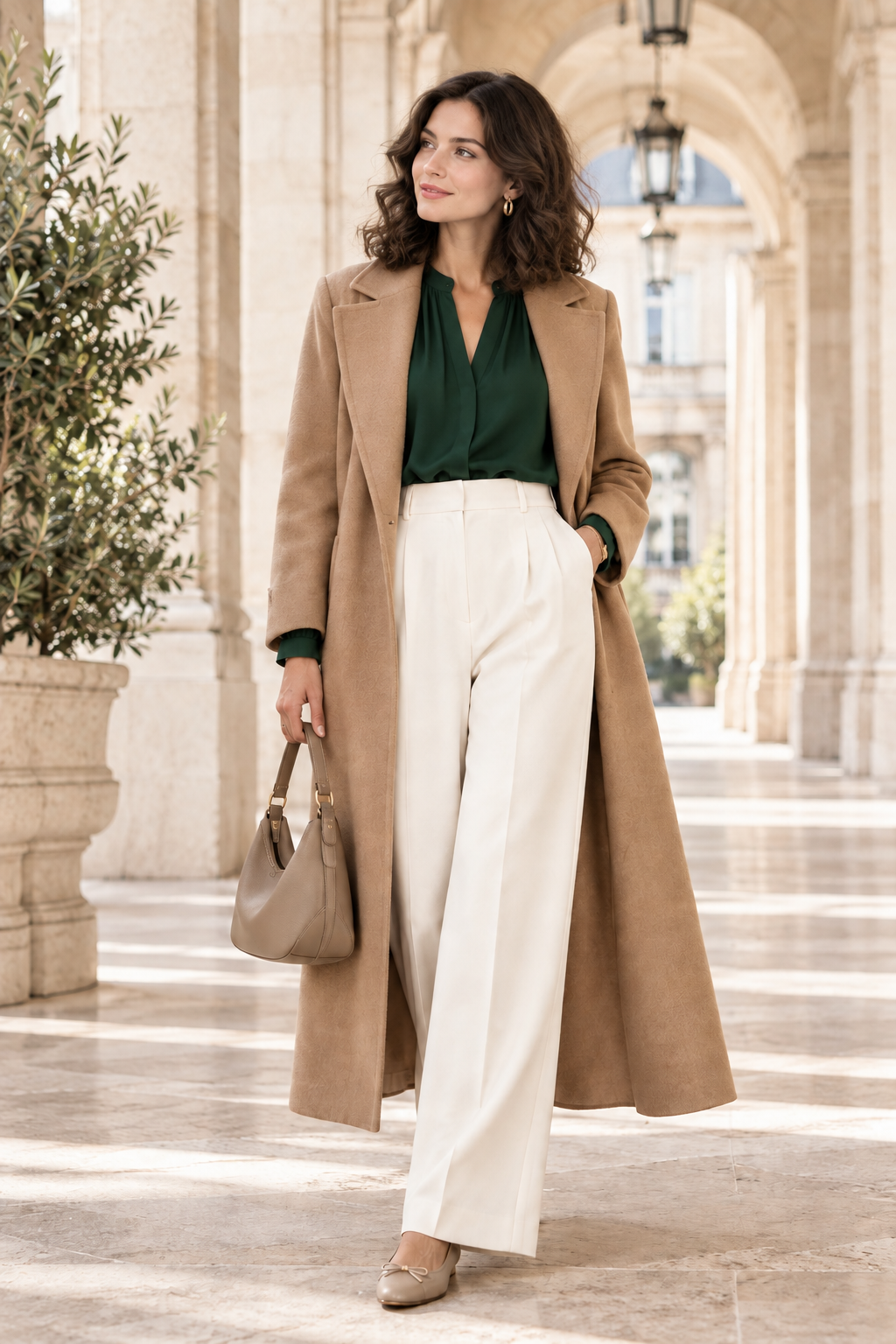
The eighth look uses a muted sage blouse under a long cream outer layer, with tailored shorts and opaque tights creating a distinct proportion. It is a styling concept that can be adapted for suitable weather and settings; it is not a universal seasonal prescription. The quiet color relationship is the most portable part of the idea. Sage brings a subtle note of color, while cream keeps the overall composition light.
If shorts and tights are not part of your routine, the same color story works with a skirt or tailored trouser. Keep the blouse as the soft point of color and let the outer layer provide a calm frame. A long coat can make a compact lower silhouette feel more elongated, but it should be chosen for comfort and appropriate weather. If a heavy coat is impractical, a lighter jacket or cardigan will preserve the palette with less warmth.
Muted green can work beside ivory, sand, camel, and some shades of brown. Pay attention to undertones, because sage can lean gray, yellow, or blue depending on the garment. There is no need to match every piece exactly. A close family of tones often feels more relaxed and can be easier to build from existing clothes.
For accessories, choose a narrow scarf, small earrings, or a practical bag in a color already in the outfit. Avoid adding an accessory solely because the image shows one. Your real-life setting, mobility, and needs matter more than reproducing a picture. If you spend the day walking, choose shoes that support that; if the weather is uncertain, plan for a layer that can be carried comfortably.
Look 9: Stripes, suede, and a light trench

A fine navy-and-ivory stripe introduces pattern without overwhelming the calm palette. The sand-toned skirt and light outer layer keep the composition warm, while the stripe adds a deliberate point of definition near the face. The look shows how a single pattern can serve as the outfit's anchor, allowing the rest of the pieces to remain relatively quiet.
When choosing a stripe, consider its scale and contrast. A narrow, low-contrast stripe can blend into a tonal outfit, while a wider, sharper stripe becomes more prominent. Neither is inherently better. The useful question is whether it suits the garments around it and how noticeable you want the pattern to be. If a patterned top feels too bold, a striped scarf or small accessory can offer a subtler version of the same idea.
A suede-like skirt adds a matte surface to the combination. If the garment is delicate, check its care instructions before wearing it in conditions that may cause staining or moisture exposure. A trench-style layer can be worn open to reveal the base outfit, or belted when a more defined shape is comfortable. Let the belt sit naturally rather than pulling the coat tight, and ensure the hem works with the skirt and shoes.
This formula adapts easily: use a striped shirt with tailored trousers, a striped knit with a plain skirt, or a neutral top with one patterned accessory. Keep the number of competing patterns low if you prefer a refined effect. A second pattern can work when scale and color are considered, but it is not needed to make the outfit feel personal. One well-placed stripe is often enough.
Look 10: Ivory wool and terracotta satin

The final look places a muted terracotta top between an ivory blazer and cocoa-colored trousers. This arrangement makes color the quiet focal point. The warm middle tone connects the light jacket to the deeper trouser, while a soft scarf can repeat the palette and add movement. The visual result is richer than a simple light-and-dark pairing, but still restrained.
Terracotta can range from dusty and subtle to vivid and saturated. Choose a tone that feels comfortable against the colors you already wear. If a camisole is not practical for your setting, a blouse or fine knit in a similar shade can create the same relationship. The point is the bridge between the jacket and trouser, not one specific garment category.
Pleated trousers bring structure and movement at once. Check how the pleats sit when standing and seated, and whether the waistband feels comfortable. A tailored piece should not require constant adjustment. The blazer can be worn open for a more relaxed silhouette or fastened if its cut supports that. When trying the combination, view it from the front and side; the balance can look different in motion than in a still image.
Finish with a simple shoe that complements the trouser's hem. A scarf should not compete with the top's color; a neutral or tonal one will keep the center of the outfit clear. If you prefer less layering, remove the scarf and let the jacket and blouse do the work. Editing is part of the styling: each item should either support the color story, shape, comfort, or practical purpose of the outfit.
Make the formulas your own
These ten looks are best read as a set of styling prompts. They do not ask you to recreate every image or to buy a new wardrobe. Start with a piece you already reach for and ask which relationship in the editorial catches your attention. Is it the contrast between a matte knit and a glossy skirt? The way a pale jacket frames a darker base? The small rhythm of a stripe? Choose just one of those ideas, then test it with your own clothes.
For a simple wardrobe exercise, lay out three pieces in a shared color family and add one item that changes the texture or shape. Photograph the combination in natural light, or stand in front of a mirror and note what feels comfortable. If an outfit feels too heavy, remove a layer or choose a lighter shoe. If it feels too plain, add a tactile accessory or a modest color accent. Small adjustments can change the whole impression without changing the core pieces.
Pay attention to your real calendar. An outfit for a long commute needs different shoes than an outfit for a short dinner. A layer you cannot comfortably carry may not be useful, even if it looks elegant. A delicate skirt may be unsuitable for an active day. Styling should work with the way you live, and a refined look is not a reason to ignore comfort, mobility, weather, or dress codes.
Think carefully about what you already own before buying anything new. A light cardigan may serve as the soft layer in several formulas. One pair of neutral trousers may work with a blouse, a knit, and a blazer. A scarf can change the balance of an outfit without adding another full garment. If you decide to shop, verify the actual garment details: fiber composition, measurements, construction, care instructions, and return terms. An image can suggest a direction, but product information and fit should guide a purchase.
Color repetition is a practical way to bring an outfit together. Repeat the shoe color in a belt or bag, or echo a blouse tone in a scarf. You do not need to coordinate everything. One repeated accent often feels more natural than a perfectly matched set. Similarly, let one element lead. If the skirt has movement, keep the top calm. If the jacket is highly textured, let the remaining layers be simple. This keeps the outfit legible and gives each garment room.
Finally, allow personal preference to matter. Some people love long layers; others prefer a clean, compact silhouette. Some enjoy soft neutrals; others want a brighter color or a stronger pattern. Use the editorial as a vocabulary, not a rulebook. Replace colors, change proportions, choose different fabrics, or remove accessories until the combination feels like something you would genuinely wear. An outfit becomes convincing when the wearer feels at ease in it.
Build a useful wardrobe from the formulas
A useful wardrobe is not a row of identical outfits. It is a small set of pieces that can move between combinations without requiring a complicated plan each morning. The ten looks suggest several possible anchors: a fine knit, a light shirt, a tailored trouser, a skirt with movement, a simple blazer, and an outer layer that works with more than one base. You do not need every category. Begin by noticing which garment shapes already fit your daily routine and which ones stay unworn.
Try a three-piece exercise before making a shopping list. Choose one top, one lower piece, and one optional layer. Then make a second outfit by replacing just one element. If the same blazer works with a skirt and trousers, it is earning its space. If a scarf shifts the outfit but is uncomfortable or impractical, it may be better as an occasional detail than a daily essential. The goal is to understand how your clothes work together, not to reach a particular number of items.
Keep notes about what makes an outfit comfortable. You may prefer a softer waistband for long days, sleeves that can be pushed up, a coat with room for a knit, or shoes that support walking. Those observations are more useful than copying a styling image exactly. They help you choose future garments that connect to your actual life and reduce the chance of buying something that only works in a photograph.
When you do identify a gap, define it precisely. “Another neutral top” is vague; “a lightweight layer that fits under my blazer and works with two trousers I already own” is actionable. A specific role makes comparison easier and encourages deliberate choices. It also leaves room to find the right piece over time rather than settling for an item that does not quite fit your needs.
Choose a calm color story
Neutral dressing becomes more personal when you pay attention to color temperature. Cream, ivory, and soft white can look close at first glance, yet their undertones may lean warm, cool, or slightly muted. Camel and cocoa often bring warmth; charcoal and navy can add definition without the sharpness some people associate with pure black. Sage, blush, and terracotta provide measured color while still sitting comfortably beside many neutral pieces.
To test a palette, hold garments together in daylight and look at them as a group rather than one by one. A color that feels appealing alone may seem too yellow or too cool beside the rest of your wardrobe. That does not make it wrong; it simply tells you how to use it. A small scarf or top can introduce a new shade without committing to a coat or full outfit. Repeating the shade once in a shoe, bag, or accessory can connect the combination.
Use value as well as hue. A pale cream beside a deep cocoa creates more contrast than cream beside oatmeal. If you want a soft result, keep the light-dark difference moderate and add texture to provide interest. If you like a more defined silhouette, use a darker trouser under a lighter jacket, or a dark top beneath a pale open layer. Both approaches can be adapted to your preferred level of contrast.
Exact matching is not necessary. Slightly different shades can make an outfit feel lived in and dimensional, while a perfectly matched set can look more formal. Let the occasion and your preference guide the choice. If you are uncertain, start with one main neutral, one secondary neutral, and a single accent. The limited palette makes it easier to see how each garment contributes.
Balance length, volume, and movement
Proportion is the relationship between the lengths and widths of garments when worn together. It is not a formula for making one body type look like another. It is a tool for deciding how an outfit feels. A cropped jacket above a wide trouser can create a clear waistline; a long open coat over a narrow base can create a continuous vertical line; a relaxed knit over a flowing skirt can feel softer and more casual. There are many valid combinations because comfort and personal taste matter.
When trying a look, check it while standing, walking, and sitting. A jacket that looks balanced in a mirror may ride up when you move. A skirt that seems fluid may feel restrictive when you climb stairs. Wide trousers can catch under a shoe if the hem is too long. These details are not minor: they affect whether you reach for the outfit again. Adjust a hem, choose a different shoe, or change the layer before deciding the formula does not suit you.
Volume can be distributed in different ways. If both top and bottom are loose, a visible neckline, cuff, or hem can keep the outfit from feeling visually crowded. If one piece is structured, the other can be softer. A belt may help clarify a transition, but it is never mandatory. The garment should fit comfortably without constant tugging, and a naturally relaxed silhouette can be just as polished as a sharply defined one.
Movement is part of the design. Pleats, soft scarves, open coats, and wide hems create motion as the wearer walks. Let those elements have space. If several pieces move at once, keep the color arrangement simple. If the outfit is mostly still and tailored, a small flowing accent can bring it to life. The best balance is the one that makes the outfit feel easy rather than carefully held in place.
Edit accessories with intention
Accessories can repeat color, add texture, or serve a practical purpose. A belt may help a garment sit as intended. A scarf can soften a neckline or add warmth. A bag carries what you need. Shoes affect both the silhouette and how comfortably you move through the day. Start with those roles before considering purely decorative additions. This keeps the styling grounded and makes it easier to decide when the outfit is finished.
One repeated detail often creates more cohesion than several exact matches. A brown shoe can echo a cocoa skirt, while a neutral bag sits quietly beside both. A small gold-toned earring can pick up a warm accent without requiring a full matching set. If the outfit already has a strong texture or pattern, keep accessories simpler so the garment remains clear. If the clothes are very minimal, one distinctive accessory can provide a personal focal point.
Scale matters. A narrow scarf can disappear beneath a heavy coat, while a very full wrap may overwhelm a small neckline. A small bag may suit a short outing but not a full day away. Think about proportion and practical use together. An accessory that looks right but cannot carry what you need may not be the right choice for that day.
Before leaving, remove one item if the outfit feels busy. Then check whether the remaining pieces still feel complete. Editing is not about minimizing personal expression; it is a way to make each choice legible. A memorable outfit can be simple, colorful, ornate, or quiet. What matters is that the details feel deliberate and comfortable to the person wearing them.
Layer for real days and changing weather
Layering is most successful when each layer has a purpose. A base garment should feel comfortable against the skin and work on its own when the outer layer comes off. A middle layer can add warmth or texture. The outer layer should suit the weather and allow enough room to move. If an outfit only works when every piece stays perfectly in place, simplify it until it fits your day.
Consider temperature, wind, rain, indoor heating, and how far you will walk. A long coat may look elegant in a courtyard but become cumbersome on public transport or in a crowded room. A fine cardigan can be easier to carry. A scarf can add warmth and be removed quickly. Choose garments and shoes for the conditions you will actually face, not only for the setting in a photograph.
Layer thickness affects fit. If you plan to wear a substantial knit under a blazer, try them together before committing to the combination. Check shoulder movement, arm lift, and closure. If the layers pull or bunch, choose a lighter knit or roomier outerwear. Comfort is a sign that the outfit is well considered, not a compromise against style.
Seasonal adaptation can be simple. The same palette can move through cooler and warmer periods by changing fabric weight, sleeve length, or outerwear. A skirt formula might use tights and boots in one setting and lighter footwear in another. A blouse and trouser combination may work with a coat when the temperature drops. Verify each garment's suitability and care rather than relying on a seasonal label alone.
Read fabric details and care labels
Images communicate surface and drape, but they cannot confirm fiber content or construction. A fabric can look like silk, wool, suede, or cashmere in a styled image without being made from that material. When shopping, rely on the product's verified material information, measurements, and care instructions. This is especially important for sensitive skin, allergies, temperature preferences, and garments that require special maintenance.
Care methods vary by garment, finish, blend, lining, and construction. Do not assume two pieces with similar appearances can be cleaned the same way. Follow the label and any manufacturer guidance for the specific item. If you are uncertain about a delicate piece, seek advice from a qualified cleaner familiar with that garment type instead of trying a generic method that might damage it.
Storage also affects how clothes hold their shape. Some knits are better folded than hung; tailored pieces may benefit from appropriate hangers; scarves can be stored in a way that avoids snagging. The right approach depends on the garment. Give delicate items enough space and make sure they are clean and fully dry before putting them away. These small habits can help you enjoy pieces longer.
Build outfits around materials that suit your own routine. If you do not want to handle delicate care, select easy-care garments based on accurate product details. If texture matters most, look for a piece whose composition and construction provide the surface you want. The styling concept can remain the same even when the exact fiber or care needs change.
Shift each look for different occasions
A useful outfit formula can shift from one setting to another without being rebuilt from the beginning. For a daytime appointment, a knit, tailored trouser, and practical shoe may feel appropriate. For dinner, the same base can be adjusted with a more refined layer, a different shoe, or a smaller bag. The point is not to suggest that every outfit suits every venue; it is to show how a few deliberate changes can alter the mood.
Start by checking the setting's dress expectations and your own comfort. Some workplaces call for more coverage or a sharper silhouette. A social event may allow fluid shapes or a brighter accent. Travel may require shoes that are easy to walk in and layers that can be carried. Use those constraints to guide your choices rather than treating an editorial image as a universal template.
For a more polished impression, focus on fit, garment condition, and a clean finish. Smooth a collar, check the hem, and ensure the shoes are appropriate for the surface and distance. For a relaxed impression, soften the structure with a knit or an open layer. For a more expressive mood, introduce one color or accessory with personal meaning. Each direction can use the same foundational pieces.
Keep a few dependable combinations in mind for busy days, but allow them to change with weather, energy, and plans. A formula is a starting point, not a uniform. If a particular outfit stops feeling like you, change it. Good style leaves room for real life.
Use a practical try-on checklist
When testing an outfit, first check how it feels. Can you breathe comfortably, lift your arms, sit, and walk? Does the waistband stay in place? Does the shoe support the distance you will travel? Comfort is a meaningful fit measure and should not be dismissed in pursuit of a photograph-ready silhouette.
Next, look at garment relationships. Is one piece meant to lead? Do the lengths work together? Can you see the layer you intended to show? Is a scarf covering a detail you like? Try removing or changing one item at a time. Small comparisons help you understand whether the outfit needs a different proportion or simply a cleaner edit.
Check the outfit in the light where you will wear it, if possible. Indoor lighting can change how cream, taupe, blush, or sage appear. A mirror can show the overall look, while a quick photo can reveal how the colors and shapes read from a little distance. Neither is a strict test. They are tools for deciding whether the combination feels right to you.
Finally, consider the practical details: weather, bag capacity, footwear, care, and whether you need an extra layer. Prepare the pieces you actually need, then avoid adding accessories just because there is room. A simple, wearable outfit is often more effective than a complicated one that requires constant adjustment.
Shop thoughtfully when a gap remains
If you decide that a new garment would genuinely help, compare it with your existing wardrobe. Can you wear it with at least two or three pieces you already own? Does it fit your daily routine, climate, budget, and care preferences? Is the product information specific enough for you to understand what you are choosing? These questions can prevent a beautiful image from becoming an impractical purchase.
Check measurements rather than relying on a size label alone. Review garment length, shoulder width, waist and hip measurements where available, and how the item is intended to fit. If the information is unclear, seek clarification before ordering. Fit can vary by cut and construction, so an outfit idea should not be taken as a guarantee that a particular size will feel right.
Look at the exact product images and descriptions for details that matter to you. Verify material, lining, closure, care, and color. Do not infer a premium fiber or feature just because a look suggests it. If return terms influence your decision, review those terms before purchase. A considered wardrobe is built from accurate information and pieces that earn regular use.
Shopping thoughtfully also means giving yourself time to compare options. You do not need to buy every element of a look at once. Start with the item that fills the clearest need, then see whether it helps you create combinations with what you already own. If it does not, reconsider the direction. The most useful outcome of an editorial may be a fresh way to style existing pieces rather than a new order.
Frequently asked questions
Are these images photos of KIMLUD products?
They are editorial illustrations, not product listings. Check product pages for verified availability, construction, fiber content, fit, and features.
How can I create a similar look without buying new clothes?
Start with one piece you already own, then recreate a relationship rather than an exact outfit. Pair a smooth surface with a textured one, repeat one color in a second small detail, or add a light layer over a simple base.
Do neutral outfits have to be all beige?
No. Neutrals can include ivory, cream, taupe, cocoa, charcoal, navy, and muted colors such as sage or blush. Choose tones that feel harmonious with your wardrobe and personal coloring.
How do I mix fabrics without making an outfit feel busy?
Use a small number of distinct surfaces and let one garment remain visually simple. A smooth blouse beside a textured jacket or a matte knit beside a fluid skirt can create enough contrast on its own.
Can I substitute different materials for the ones shown?
Yes. Treat the material descriptions as visual inspiration, not a requirement. Choose garments based on their verified composition, construction, care instructions, comfort, and suitability for your day.
What shoes work with wide-leg trousers?
Several shapes can work. Check the trouser length with the shoes you actually plan to wear, and make sure the hem clears the ground and allows comfortable walking. The image is only a styling suggestion.
How many accessories should I add?
There is no fixed number. Start with the accessory that serves a purpose or supports the color story, then add another only if it improves the outfit. A single scarf, belt, or pair of earrings can be enough.
A quieter kind of statement
Texture, proportion, and thoughtful repetition can make familiar pieces feel newly considered. The ten looks offer starting points rather than prescriptions: one can be simplified, another brightened, and another rebuilt entirely from garments already in your closet. Keep the choices practical, verify real product details, and let comfort guide the final edit. That is the lasting value of a good outfit formula: it helps you get dressed with intention while leaving room for your own point of view.
Explore the KIMLUD Women’s Fashion, Women’s Tops, Skirts, Dresses, and Jewelry & Accessories collections for pieces to make these outfit ideas your own.
Sources & References
- KIMLUD Official Collections — www.kimlud.com
- KIMLUD Fashion Editorial Blog — www.kimlud.com
- KIMLUD Tech Editorial Blog — www.kimlud.co
No external sources cited.