


Christmas Traditions in Rome and Vatican City | Christian Capital
Christmas Traditions in Rome and Vatican City — The Christian Capital
Christmas in Rome and Vatican City is not just a holiday; it’s a deeply spiritual season rooted in centuries of Christian worship, art, culture, and public celebration. As the heart of the Roman Catholic Church and the home of the Pope, this region plays a central role in how millions of Christians around the world understand, anticipate, and celebrate the birth of Jesus Christ.

In this comprehensive guide, we explore Christmas traditions in Rome and Vatican City from Advent to Epiphany, including liturgical celebrations, cultural customs, sacred art, music, charity, and the deep meaning these practices hold for believers and visitors alike.
--- ## What Makes Rome and Vatican City the Christmas Capital?Christian History of Rome
Rome’s connection to Christianity stretches back nearly 2,000 years. According to tradition, Saints Peter and Paul were martyred here, and the first Christians worshipped in secret before Christianity became legal in the Roman Empire. In time, the Bishop of Rome — known today as the Pope — became the leader of the Western Church, which transformed Rome into the spiritual capital of Christianity.
Today, millions of pilgrims visit Rome each Christmas season to participate in liturgies, pray in ancient basilicas, and experience centuries‑old traditions that have shaped the way Christianity celebrates the birth of Christ.
 --- ## Advent: The Season of Preparation
What is Advent?
Advent is the four‑week liturgical period before Christmas. Its purpose is to help Christians prepare spiritually for the celebration of Jesus’ birth in Bethlehem, as well as to reflect on the future coming of Christ in glory.
During Advent, churches in Rome and Vatican City are adorned with simple decorations. The liturgical color for Advent is purple, symbolizing expectation and preparation. Many families and parishes build Advent wreaths with four candles, lighting a new candle each week to mark the approaching arrival of Christmas.
- First Sunday of Advent: Hope
- Second Sunday: Peace
- Third Sunday: Joy
- Fourth Sunday: Love
The Pope leads special Advent Masses in St. Peter’s Basilica, focusing on prayer, repentance, and joyful anticipation rather than material preparations.
 --- ## Nativity Scene (Presepe): A Christian Symbol
Origins of the Presepe
The Nativity scene, or presepe, is one of the most beloved Christmas traditions in Italy and especially in Rome. It began with Saint Francis of Assisi in 1223, who created the first live Nativity to help people visually connect with the story of Jesus’ birth in a humble manger.
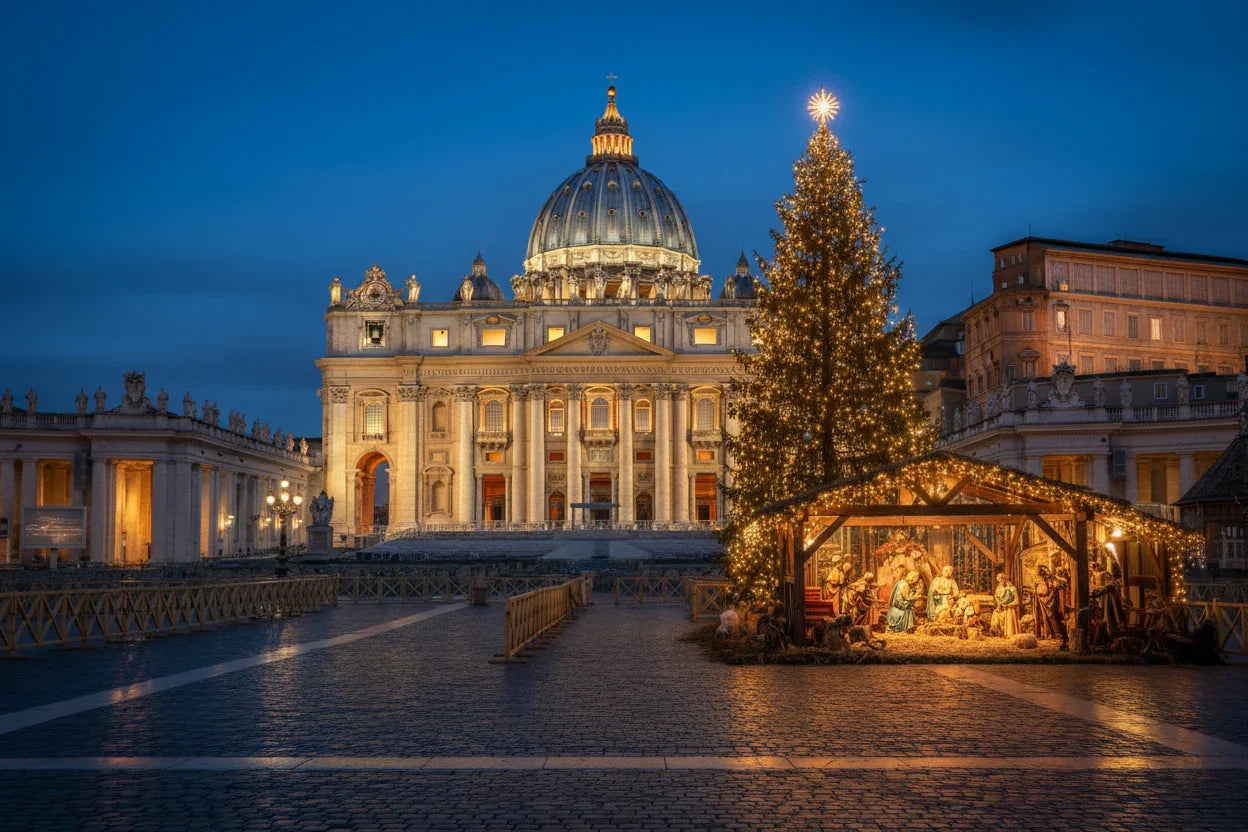
Today, Nativity scenes are found throughout Rome — in churches, public squares, homes, and even shop windows. The most famous live display is set up every year in St. Peter’s Square, often featuring figures from local artisans and a setting that reflects the story of Christ’s birth.

These displays serve as a visual reminder of the Christian belief in the Incarnation — that God became human in the person of Jesus Christ. Visitors from around the globe pause at these scenes to reflect, pray, and capture memories of the season.
--- ## The Christmas Tree in St. Peter’s SquareA Symbol of Light and Life
Although the Christmas tree tradition began in northern Europe, it has become an indispensable part of Vatican Christmas celebrations. Every year, a large Christmas tree is donated to the Vatican, usually by a European country or region.
The tree is placed beside the Nativity scene in St. Peter’s Square and is beautifully illuminated throughout the season. It symbolizes life, light, and hope — themes central to the Christian understanding of Christmas.

During Advent, the Vatican hosts a lighting ceremony that draws crowds of locals, pilgrims, and visitors. The evergreen tree standing tall in the historic square becomes a powerful visual emblem of the season.
--- ## Christmas Eve and Midnight MassThe Night of Expectation
December 24th, or Christmas Eve, holds deep spiritual significance in Rome and Vatican City. Churches across the city fill with worshippers for the Vigil Mass, including choirs, incense, and candlelight services that lead into the midnight celebration.

Papal Midnight Mass at St. Peter’s Basilica
The central liturgical event on Christmas Eve is the Midnight Mass, presided over by the Pope in St. Peter’s Basilica. Although the title “Midnight Mass” suggests a late hour, it is often celebrated earlier in the evening to accommodate greater participation.
The Mass includes:
- Scripture readings recounting Christ’s birth
- Sacred hymns and Gregorian chant
- An uplifting homily focusing on peace, mercy, and goodwill
This service is broadcast worldwide, making it one of the most viewed religious celebrations of the year. For many Christians, watching or attending this Mass is a cherished part of the Christmas tradition.
--- ## Christmas Day: The Feast of the NativityThe Celebration of Christ’s Birth
December 25th is the official feast day of the Nativity of Jesus. Churches throughout Rome hold morning Masses, with families often participating before enjoying festive meals together.

The Urbi et Orbi Blessing
A highlight of Christmas Day in Vatican City is the **Urbi et Orbi** (“to the City and to the World”) blessing delivered by the Pope from the central balcony of St. Peter’s Basilica. This address includes:
- A Christmas message of peace and hope
- A reflection on global challenges
- A blessing for all people, not only Catholics
The blessing is attended by thousands in the square and followed by millions on television and online. It emphasizes the Christian call to peace, justice, and human dignity during the holiday season.
--- ## Sacred Music and Choral TraditionGregorian Chant and Hymns
Music plays a vital role in Christmas worship throughout Rome. Gregorian chant, with its ancient melodies and spiritual depth, resonates through basilicas during Advent and Christmas liturgies.
Classical and Contemporary Works
In addition to chant, many churches host concerts featuring classical choral music, organ recitals, and sacred compositions by European masters. These performances enrich the spiritual atmosphere and draw audiences of believers and music lovers alike.
 --- ## Art, Architecture, and the Christmas Story
Visual Theology in Roman Churches
Rome’s artistic heritage deeply enhances the Christmas experience. Basilicas and chapels are adorned with paintings, mosaics, and sculptures depicting scenes from the life of Christ, especially the Nativity.
Works by Renaissance and Baroque masters bring biblical narratives to life, inviting reflection and contemplation. Whether in St. Peter’s, Santa Maria Maggiore, or smaller neighborhood churches, visitors encounter visual theology that illustrates the central themes of Christmas.
 --- ## Charity and Service During Christmas
A Season of Giving
True to Christian teaching, charity is a significant part of the Christmas season in Rome and Vatican City. Parishes, charitable organizations, and the Vatican itself organize initiatives to support those in need.
- Meals for the homeless and vulnerable
- Winter clothing drives
- Community outreach programs
- Special services for refugees and marginalized groups
The Pope frequently calls on the faithful to remember the poor and to act with compassion — a reminder that Christmas is not only a celebration but also a call to service.
--- ## The Twelve Days of Christmas and EpiphanyExtended Season Beyond December 25th
In the Christian calendar, Christmas doesn’t end on December 25th. It continues through the “Twelve Days of Christmas,” concluding with the Feast of the Epiphany on January 6th.
Epiphany and the Magi
The Feast of the Epiphany commemorates the visit of the Magi to the Christ child, symbolizing Jesus’ revelation to all nations. In Italy, Epiphany is associated with La Befana, a folkloric figure said to deliver gifts to children, similar to Santa Claus in other cultures.

In Rome, public markets, parades, and religious services celebrate this feast, blending deep Christian symbolism with local cultural traditions.
--- ## Conclusion: The Heart of Christian ChristmasA Living Tradition
Christmas in Rome and Vatican City is more than a season; it is a living tradition that blends history, theology, art, music, and culture. From the solemn prayers of Advent to the joyous celebrations of Christmas Day and Epiphany, this region embodies the heart of Christian belief in the Incarnation — that God became human in Jesus Christ.
Whether experienced through the Pope’s Midnight Mass, the Urbi et Orbi blessing, sacred music, ancient basilicas, or the faces of pilgrims in St. Peter’s Square, Christmas in Rome invites believers and visitors to reflect on hope, peace, love, and joy — themes that resonate around the world.