What Is Perfume? Understanding Fragrance, Scent, and Personal Identity
What Is Perfume?
Understanding fragrance, scent, and personal identity — a complete guide to the art and science of perfume.
Explore KIMLUD Fragrances →📖 Table of Contents
- Introduction: Why Perfume Matters More Than Ever
- What Is Perfume?
- The Meaning of Fragrance
- Understanding the Structure of a Perfume
- Why Do Humans Wear Perfume?
- Perfume Throughout Human History
- What Makes a Perfume Last?
- Understanding Fragrance Families
- Fragrance and Memory
- How to Choose a Signature Fragrance
- The Future of Perfume
- Frequently Asked Questions
Introduction: Why Perfume Matters More Than Ever
Perfume is one of humanity's oldest forms of self-expression. Long before fashion brands, social media profiles, or personal image consultants existed, people used fragrance to communicate identity, status, spirituality, attraction, and belonging.
Across thousands of years and countless civilizations, scent has played a central role in human culture. From sacred temples in ancient Egypt to royal courts in Arabia, from Indian attars to modern niche fragrances, perfume has always been more than a pleasant aroma. It is an invisible language.
Today, perfume remains one of the most personal choices we make. The fragrance we wear can influence first impressions, trigger memories, shape confidence, and become part of how others remember us. At KIMLUD, we believe fragrance is not simply something you wear. It is a reflection of who you are.

Discover Your Signature Scent
Explore KIMLUD's curated fragrance collection — from floral and fresh to oud and amber.
Shop Fragrances & Perfumes →What Is Perfume?
Perfume is a carefully crafted blend of aromatic ingredients designed to create a specific scent experience. These ingredients may come from natural sources such as flowers, woods, resins, fruits, herbs, and spices. They may also include modern aroma molecules developed by perfumers to enhance creativity, longevity, and consistency.
The purpose of perfume is simple: to create a fragrance that evokes emotion, memory, atmosphere, or identity. Just as a symphony contains multiple instruments, a perfume contains multiple scent layers that unfold over time.
| Perfume Type | Main Ingredients | Primary Purpose | Emotional Effect |
|---|---|---|---|
| Floral | Rose, jasmine, lily, peony | Romance, elegance | Soft, feminine, timeless |
| Woody | Sandalwood, cedar, vetiver | Sophistication | Grounded, confident |
| Oriental/Amber | Oud, amber, vanilla, spices | Luxury, seduction | Warm, mysterious, sensual |
| Fresh | Citrus, green, aquatic | Energy, clarity | Clean, uplifting, vibrant |
| Gourmand | Vanilla, caramel, coffee | Comfort, indulgence | Cozy, playful, memorable |
The Meaning of Fragrance
The word fragrance refers to a pleasant smell or aroma. However, in perfumery, fragrance has a deeper meaning. A fragrance is an emotional experience created through scent. People do not remember perfumes solely because of ingredients. They remember how those fragrances made them feel.
A scent may communicate confidence, elegance, warmth, mystery, freshness, luxury, comfort, or power. The right perfume does not just smell good — it tells a story about the person wearing it.
Understanding the Structure of a Perfume
Every perfume is built in layers known as fragrance notes. Perfumers divide fragrances into three levels: top notes, heart notes, and base notes.
Top Notes
Top notes create the initial impression — bright, energetic, refreshing. They evaporate within 15–60 minutes. Common examples: bergamot, lemon, grapefruit, mint.
Heart Notes
Heart notes are the soul of a fragrance, emerging after top notes fade. They define the perfume's personality and last several hours. Common examples: rose, jasmine, lavender, cardamom.
Base Notes
Base notes provide depth and longevity — sometimes 8+ hours. Common examples: oud, amber, sandalwood, vanilla, musk.

| Note Type | When Detected | Duration | Common Examples | Character |
|---|---|---|---|---|
| Top Notes | Immediately | 15–60 min | Bergamot, lemon, mint, grapefruit | Bright, fresh, energetic |
| Heart Notes | After 20–60 min | 2–4 hours | Rose, jasmine, lavender, cardamom | Warm, floral, spicy |
| Base Notes | After 30–60 min | 4–12+ hours | Oud, amber, sandalwood, musk, vanilla | Deep, rich, lasting |
Experience All Three Notes
Explore KIMLUD's fragrance collection — from bright citrus top notes to deep oud base notes.
Shop All Fragrances →Why Do Humans Wear Perfume?
Although fragrance traditions differ around the world, the reasons people wear perfume are remarkably similar across cultures and eras.
Identity
Perfume communicates something about us before we speak. Your perfume is often the first thing people notice — and the last thing they forget.
Confidence
A well-chosen perfume can increase confidence and create a sense of presence. Studies show wearing a pleasant fragrance measurably increases self-confidence and social performance.
Attraction
Research in evolutionary biology suggests scent communicates biological compatibility at a subconscious level — making fragrance one of the most powerful tools of attraction available.
Ritual
For many people, applying fragrance is a daily ritual marking transitions: beginning the day, preparing for an event, celebrating special occasions.
Memory
Scent is the sense most closely linked to memory. A single fragrance can instantly transport you to a specific moment with more emotional precision than any photograph.

Perfume Throughout Human History
The story of perfume is closely linked to the story of civilization itself.
| Civilization | Era | Primary Use | Key Ingredients |
|---|---|---|---|
| Ancient Egypt | ~3000 BCE | Religious ritual, burial, medicine | Frankincense, myrrh, lotus |
| Ancient India | ~3000 BCE | Spiritual practice, Ayurveda | Rose, sandalwood, saffron, oud |
| Ancient China | ~2000 BCE | Philosophy, meditation, medicine | Agarwood, sandalwood, cassia |
| Ancient Greece | ~500 BCE | Beauty, athletics, religion | Rose, iris, marjoram, thyme |
| Ancient Rome | ~100 BCE | Social status, luxury, baths | Imported exotic resins |
| Arabia (Islamic Golden Age) | ~900 CE | Science, spirituality, luxury | Oud, rose, amber, musk |
| Renaissance Europe | ~1500 CE | Royal courts, fashion | Jasmine, musk, civet |
| Modern Era | 1800s–Today | Personal identity, luxury | All fragrance families |
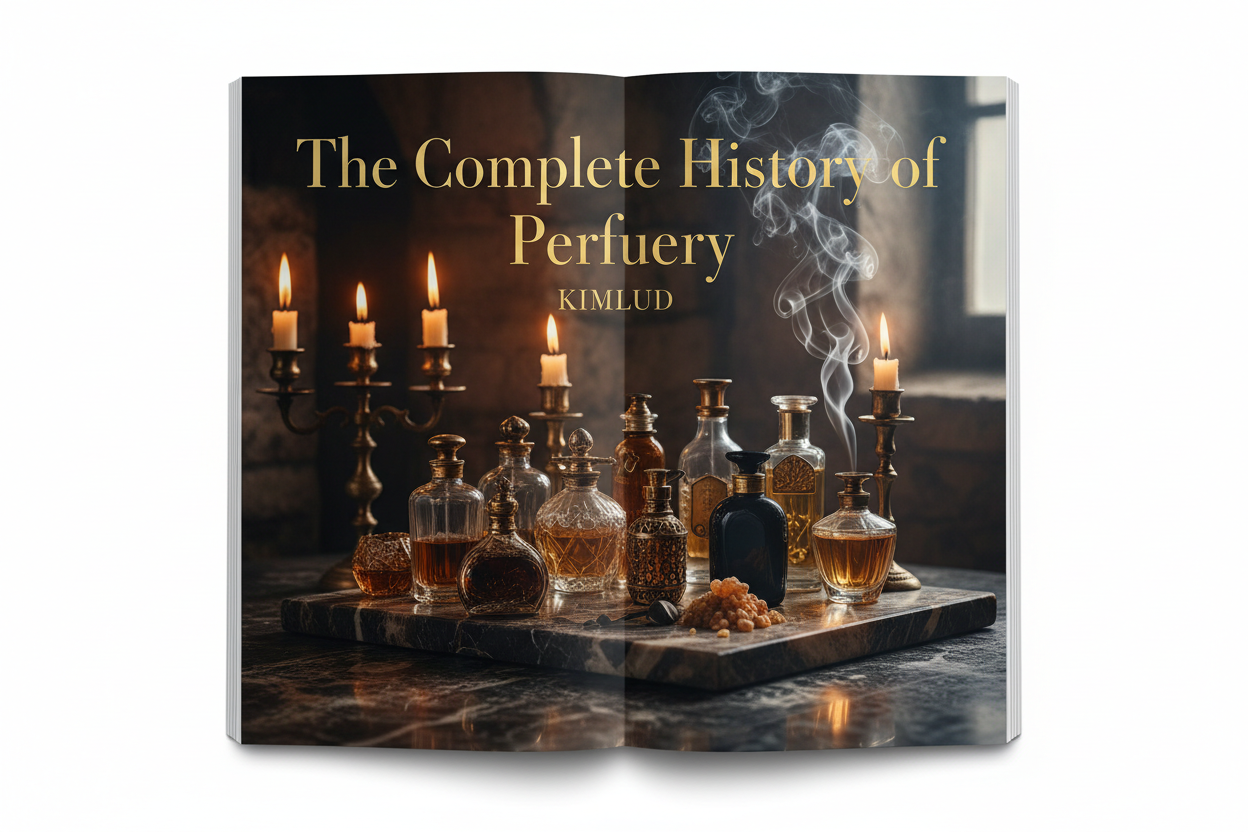
For a deeper exploration: The Complete History of Perfumery.
What Makes a Perfume Last?
Several factors influence longevity: concentration, ingredients, skin type, and application technique.
Concentration
Higher fragrance oil concentrations last longer and project more strongly.
Ingredients
Heavier ingredients like oud, amber, sandalwood, and musk last longer. Lighter citrus notes fade more quickly.
Skin Type
Oily skin retains fragrance longer. Moisturizing with unscented lotion before applying perfume significantly extends longevity.
Application Points
Apply to pulse points — wrists, neck, inner elbows, behind knees — where body heat diffuses fragrance throughout the day.
| Type | Concentration | Longevity | Projection | Best For |
|---|---|---|---|---|
| Parfum (Extrait) | 20–40% | 8–12 hours | Intimate, skin-close | Special occasions, evening |
| Eau de Parfum | 15–20% | 6–8 hours | Moderate, elegant | Daily luxury standard |
| Eau de Toilette | 5–15% | 3–5 hours | Fresh, noticeable | Everyday wear |
| Eau de Cologne | 2–5% | 2–3 hours | Light, airy | Sport, summer, casual |
| Eau Fraîche | 1–3% | 1–2 hours | Very light | Post-shower, hot weather |
Understanding Fragrance Families
Perfumes are grouped into fragrance families — broad categories sharing similar aromatic characteristics.
Floral
Built around rose, jasmine, lily, and orange blossom. The most popular category globally — elegant, romantic, timeless.
Woody
Built around sandalwood, cedarwood, and vetiver. Sophisticated, confident, grounded across all seasons.
Amber (Oriental)
Warm, luxurious, sensual — vanilla, resins, spices, amber accords. Excellent longevity, ideal for evening wear.
Fresh
Energetic, clean, uplifting — citrus, green notes, aquatic accords. Perfect for daytime and warm weather.
Gourmand
Inspired by chocolate, coffee, caramel, vanilla. Comforting, indulgent, one of the fastest-growing categories.

| Family | Key Notes | Personality | Best Season | Best Occasion |
|---|---|---|---|---|
| Floral | Rose, jasmine, lily, peony | Elegant, romantic, feminine | Spring, summer | Daytime, dates, weddings |
| Woody | Sandalwood, cedar, vetiver, patchouli | Sophisticated, grounded | Autumn, winter | Office, evening, formal |
| Amber/Oriental | Vanilla, amber, oud, spices | Sensual, mysterious, warm | Autumn, winter | Evening, intimacy, special occasions |
| Fresh | Citrus, green, aquatic | Energetic, clean, uplifting | Spring, summer | Daytime, sport, casual |
| Gourmand | Vanilla, caramel, coffee, chocolate | Comforting, indulgent | Autumn, winter | Casual, cozy evenings |
| Chypre | Oakmoss, bergamot, labdanum | Elegant, complex, timeless | All seasons | Formal, classic occasions |
| Fougère | Lavender, coumarin, oakmoss | Fresh, herbal, clean | Spring, summer | Everyday, professional |
Find Your Fragrance Family
Floral, woody, amber, or fresh — explore KIMLUD's full fragrance collection.
Shop All Fragrances →Fragrance and Memory: Why Scent Feels So Personal
Among all human senses, smell has a unique relationship with memory. The olfactory system is the only sense with a direct neural pathway to the limbic system — the brain's emotional and memory center.
This phenomenon — known as the Proustian memory effect — explains why fragrance often becomes deeply emotional and personal. Over time, a perfume becomes associated with experiences and memories. Eventually, the scent itself becomes a personal story — invisible, intimate, and uniquely yours.
How to Choose a Signature Fragrance
A signature fragrance is a scent that feels authentically yours — one that people associate with your presence and remember long after you have left the room.
| Your Personality | Recommended Family | Key Notes to Explore |
|---|---|---|
| Fresh, energetic, active | Fresh / Citrus | Bergamot, lemon, green tea, aquatic |
| Romantic, elegant, feminine | Floral | Rose, jasmine, peony, white florals |
| Mysterious, sophisticated, bold | Woody / Amber | Oud, sandalwood, amber, patchouli |
| Warm, comforting, sensual | Gourmand / Oriental | Vanilla, caramel, musk, soft spices |
| Confident, professional, timeless | Chypre / Woody | Oakmoss, cedar, bergamot, vetiver |
Tips for finding your signature fragrance:
- Always test on skin — fragrances smell different on skin than in the bottle
- Allow at least 30 minutes for the fragrance to fully develop before deciding
- Test no more than 3 fragrances at once to avoid olfactory fatigue
- Wear your shortlist for a full day before committing
- Trust your emotional response — the right fragrance will feel like you
The Future of Perfume
Modern perfumery continues to evolve rapidly. Current trends include sustainable sourcing, biotechnology enabling lab-grown aroma molecules, personalized fragrance experiences through AI, ethical ingredient production, and the rise of niche artisan perfumery. Yet the core purpose remains unchanged: people seek fragrances that help them express identity, evoke emotion, and create lasting memories.
Find Your Signature Fragrance at KIMLUD
From floral and fresh to oud and amber — discover fragrances that reflect who you are.
Shop KIMLUD Fragrances →Related Articles in the KIMLUD Fragrance Series
- The Complete History of Perfumery
- What Is Perfume? — You are here
- What Is Oud? — Coming soon
- What Is Attar? — Coming soon
- Perfume Concentrations Explained — Coming soon
Frequently Asked Questions About Perfume
What is perfume?
Perfume is a carefully crafted blend of aromatic ingredients designed to create a specific scent experience and evoke emotional responses.
What are fragrance notes?
Fragrance notes are the layers of a perfume that unfold over time: top notes (15–60 min), heart notes (2–4 hours), and base notes (4–12+ hours).
What is the difference between perfume and Eau de Parfum?
Parfum contains 20–40% fragrance concentration and lasts 8–12 hours. Eau de Parfum contains 15–20% and lasts 6–8 hours. Eau de Toilette is lighter at 5–15% and lasts 3–5 hours.
What are top notes in perfume?
Top notes are the initial scents detected immediately after applying a fragrance — bright, fresh, energetic, fading within 15–60 minutes.
What are heart notes?
Heart notes form the core personality of a perfume, emerging after top notes fade. They last 2–4 hours. Common examples: rose, jasmine, lavender, cardamom.
What are base notes?
Base notes provide depth and longevity, lasting 4–12+ hours. Common examples: oud, amber, sandalwood, vanilla, musk.
Why do people wear perfume?
People wear perfume to express identity, boost confidence, create lasting memories, enhance attraction, and mark daily rituals and special occasions.
What fragrance family lasts the longest?
Woody, amber, oud, and musk-based fragrances generally have the strongest longevity due to heavier aromatic molecules.
What is a signature fragrance?
A signature fragrance is a perfume that consistently reflects a person's identity, personality, and personal style.
How do I choose the right perfume?
Choose a fragrance that aligns with your personality, lifestyle, and emotional response to scent. Test on skin, allow it to develop for at least 30 minutes, and choose what feels authentically yours.