


Same World, Different Lives: How Human Connection & Lifestyle Have Changed from 1950 to 2026
From doorstep bouquets to dating apps, from one shared screen to five personal ones — the story of how we live, love, dress, and connect has changed beyond recognition in just 75 years.
Look at two photographs side by side. In the first, taken sometime in the 1950s, a young man stands at a front door holding flowers, meeting a young woman’s parents for the first time. Everyone is dressed formally. The light is warm. The moment is deliberate, ceremonial, shared.
In the second, taken in 2026, a young woman lies in bed in the blue glow of her phone, swiping through dating profiles. She is alone, comfortable, and connected to thousands of potential partners simultaneously — and to none of them at all.
Same world. Completely different lives.
At KIMLUD, we believe that fashion and lifestyle are inseparable — that what we wear, how we gather, how we love, and how we spend our time are all part of the same story. So here is that story, told decade by decade, from 1950 to 2026.
The Street: Presence vs. Distraction
In 1950, a couple walking down a city street was on the street. They were present — aware of the shop windows, the other pedestrians, the weather, each other. He wore a tailored charcoal suit and a hat. She wore a fitted mustard yellow dress, heels, and gloves. They were dressed for the world because the world was watching.
In 2026, that same couple walks the same street — but each is looking at a phone. He wears a grey hoodie and cargo trousers. She wears a beige oversized coat and white sneakers. They are comfortable, practical, and largely invisible to each other and to the street around them.
The shift is not just aesthetic — it is existential. In 1950, public space was a stage. In 2026, it is a corridor between screens.
Fashion reflection: Structured, colorful, intentional dressing gave way to comfortable, neutral, functional clothing. When the street stopped being a social performance, fashion stopped performing.
The Beach: Togetherness vs. Content Creation
A 1950s beach scene: a couple sits together on a blanket, watching their children play in the waves. A wicker picnic basket. A striped umbrella in red and white. She wears a modest one-piece in warm terracotta stripes. He wears high-waisted trunks. They are watching the sea. They are there.
A 2026 beach scene: a family of four at sunset, but no one is watching the sunset. One child takes a selfie. Another scrolls on a tablet with headphones on. The mother holds her phone up to capture the golden light for Instagram. The father checks his messages. The sunset — extraordinary, unrepeatable — happens largely unwatched.
Fashion reflection: 1950s beachwear was modest, structured, and color-coordinated as a family unit. 2026 beachwear is individual, expressive, and chosen partly for how it photographs — coral bikinis, floral prints, and sarongs optimized for the golden hour shot.
Dating: Courtship vs. The Algorithm
In 1950, dating was a ritual with rules. A young man called on a young woman at her home. He met her parents. He brought flowers. The process was slow, deliberate, and deeply social. Courtship could last months before a first kiss.
In 2026, dating is an algorithm. Tinder, Hinge, Bumble — platforms that reduce human beings to a photograph and a swipe. Studies consistently show that despite having more options than any generation in history, young people in 2026 report feeling more lonely than ever before.
Fashion reflection: 1950s date-night fashion was formal and gender-defined — full skirts, tailored suits, pearl earrings. 2026 date-night fashion is strategic — chosen to photograph well and signal identity before a word is spoken.
Nightlife: Elegance vs. Self-Expression
In 1950, a night out meant a ballroom. Chandelier light. A live orchestra. Partners danced together, face to face. The evening had structure — arrival, dancing, supper, departure — and everyone shared the same experience.
In 2026, a night out means a nightclub with neon lights and a DJ. The dancing is individual. Phones are raised to capture the moment. The music is so loud that conversation is impossible. Everyone is together and alone simultaneously.
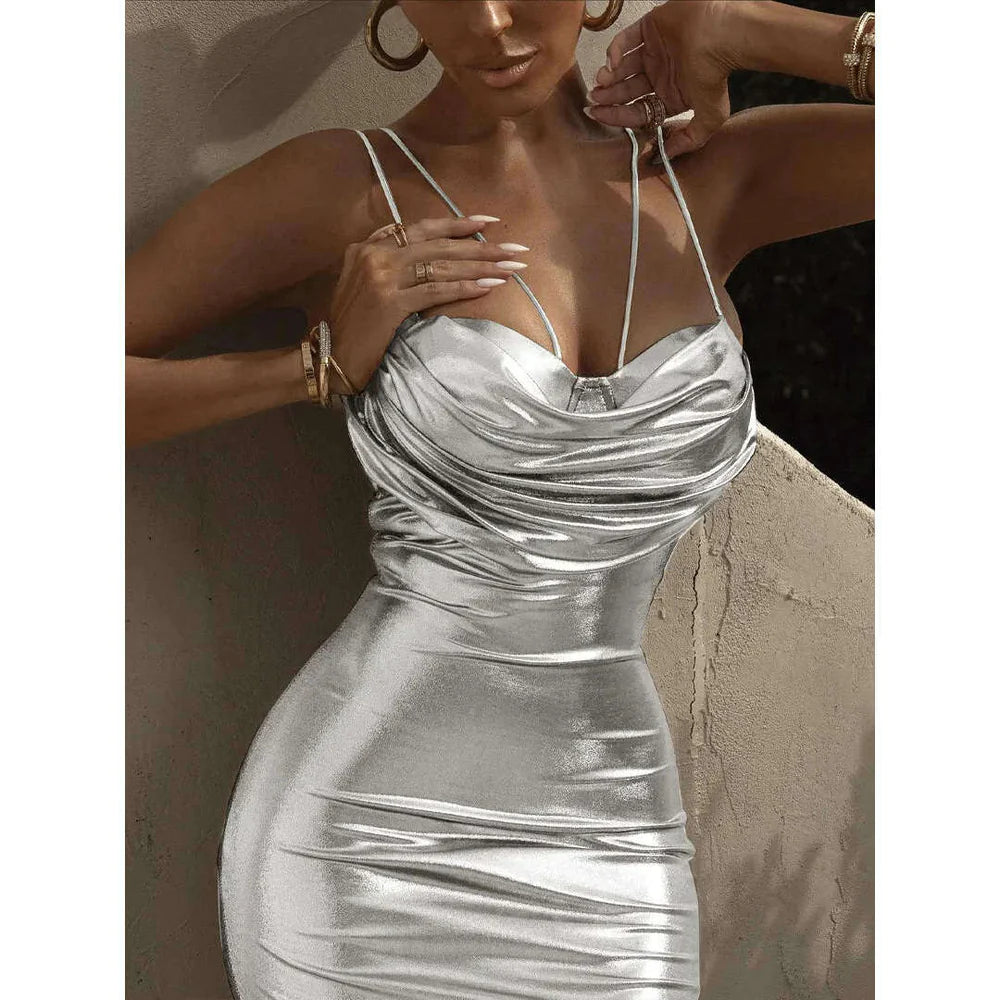
Fashion reflection: Ballroom fashion was ceremonial — champagne, ivory, jewel tones. Nightclub fashion is expressive — black, neon, metallic, chosen to look striking in a photograph.
The Living Room: One Screen vs. Infinite Screens
In 1950, an entire family gathered around a single radio or television set. One amber lamp. Warm wooden furniture. Everyone facing the same direction, sharing the same experience, having the same conversation afterward.
In 2026, that same family sits in the same room — but every single person is illuminated by their own personal screen. Same room. Five different worlds. The shared experience has been replaced by five parallel individual realities happening simultaneously in the same physical space.
This is perhaps the defining image of our time: together, but alone.
Fashion reflection: 1950s home clothing was presentable — you dressed for your family. 2026 home clothing is purely comfort-driven: loungewear, oversized hoodies, soft neutrals. When home became a world of private screens, the need to dress for others disappeared.
What Changed Everything? The Five Turning Points
- Television (1950s–60s): The first screen — but a shared one that united families.
- The Sexual Revolution & Feminism (1960s–70s): Rewrote the rules of dating, dress, and gender roles permanently.
- MTV & Consumer Culture (1980s): Made identity a product. Fashion became self-branding.
- The Internet & Mobile Phone (1990s–2000s): Began the fragmentation of shared experience.
- Social Media & the Algorithm (2010s–2026): Completed the fragmentation. Every person now lives in a personalized reality curated by an algorithm.

Is Something Being Lost? And Is Something Being Gained?
It would be easy to simply mourn what has been lost — the presence, the formality, the shared experience, the flowers at the door. But something has also been gained. In 2026, a young woman in a small town in rural France can find her community — people who share her exact aesthetic, her values, her sense of humor — anywhere in the world. Fashion micro-communities — cottagecore, dark academia, quiet luxury — give people a sense of belonging that geography once denied them.
The question is not whether the world has changed — it has, irreversibly. The question is what we choose to do with that change.
The KIMLUD Perspective: Dress with Intention
At KIMLUD, we believe that how you dress is how you show up — for yourself, for the people you love, and for the world. Because in a world where everything is optimized for the algorithm, dressing for yourself — truly, authentically, deliberately — is a quiet act of revolution.
Explore our collections at www.kimlud.com and find the pieces that tell your story.
Frequently Asked Questions
How has human connection changed from the 1950s to 2026?
Human connection has shifted from communal, in-person, and formal interactions — shared family meals, ballroom dancing, doorstep courtship — to increasingly digital, individual, and screen-mediated experiences. While technology has expanded the reach of connection globally, studies show that rates of loneliness, especially among young people, have increased significantly by 2026.
How did dating change from 1950 to 2026?
In the 1950s, dating was a structured social ritual embedded in family and community — formal courtship, meeting parents, and slow-building relationships. By 2026, dating is primarily algorithm-driven through apps like Tinder, Hinge, and Bumble, where decisions are made in seconds based on photographs. Despite vastly more options, loneliness among young adults has paradoxically increased.
How has fashion changed to reflect lifestyle shifts from 1950 to 2026?
Fashion has moved from formal, structured, and colorful — chosen to perform for public social spaces — to comfortable, neutral, and functional, chosen for personal comfort and digital performance. As public life became more screen-mediated and private, fashion became less ceremonial and more individual.
Why do people feel more lonely in 2026 despite being more connected than ever?
The paradox of modern connection is that digital platforms offer breadth — thousands of contacts, followers, and potential partners — but reduce depth. Algorithmic curation creates personalized realities that fragment shared experience. The result is that people are physically together but experientially isolated, each in their own screen-mediated world.
What is the biggest lifestyle difference between the 1950s and 2026?
The most profound shift is the move from shared experience to fragmented individual experience. In the 1950s, families, communities, and societies shared the same information, entertainment, and social rituals. By 2026, every individual inhabits a personalized reality — their own algorithm, their own content feed, their own digital world — even when physically present with others.
How has the living room changed as a social space from 1950 to 2026?
In the 1950s, the living room was the center of shared family life — one radio or TV, one conversation, one collective experience. By 2026, the living room contains multiple people each on their own device, creating parallel individual experiences in the same physical space. The shared screen has been replaced by infinite personal screens.
Have a question? Our team is here for you via live chat, email at support@kimlud.com, or our contact page.
Written by the KIMLUD Editorial Team | www.kimlud.com


