
Article: How to Build a Luxury Capsule Wardrobe on a Budget
How to Build a Luxury Capsule Wardrobe on a Budget
THE KIMLUD EDIT · FASHION · HOW-TO
A Luxury Capsule Wardrobe, Built Around Your Real Life
A practical guide to looking polished, buying thoughtfully, and making more of the clothes you already own.
The KIMLUD styling starting point

Pleated shirt and wide-leg pants set
A coordinated set offers a useful styling idea: wear the pieces together for a complete look, then test each separately with compatible clothes you already own. The product photo shows a green styling example; check the current product page for available options, sizing and item details before choosing.
Explore the KIMLUD set
1. What a luxury capsule actually means
A capsule wardrobe is a manageable group of clothes that combine into outfits for the life you actually lead. It is not a competition to own the fewest garments, and it does not require replacing everything with beige. Your capsule might be colorful, tailored, relaxed or dress-led. What matters is that its pieces fit, feel comfortable and work together often enough to justify the space they occupy.
In this guide, luxury describes a considered appearance rather than a guaranteed price point or material standard. Balanced proportions, well-maintained clothes and thoughtful finishing details can make a simple outfit feel polished. An expensive label cannot compensate for a waistband that hurts, a sleeve that interferes with your work, or shoes you cannot walk in. Equally, an affordable garment can be useful when its fit and care requirements suit you.
Start with your most frequent activities. If you work from home, walk daily and go out once a week, your wardrobe should reflect that distribution. A collection dominated by occasion dresses would leave your everyday needs unresolved. If your work requires formal clothing, prioritizing comfortable tailoring may be more useful than assembling the weekend capsule someone else recommends.
There is no universal correct number of items. Laundry frequency, climate, dress codes and storage all affect what is enough. Choose a trial period of two to four weeks and work with a small selection from your existing wardrobe. Keep occasionwear, exercise clothing and specialist work clothing separate if that makes the experiment easier. You are testing a system, not signing a permanent rule.
2. Audit your wardrobe before shopping
Identify what you genuinely wear
Set aside an hour, a clear surface and your usual shoes. Pull out the clothes you have worn repeatedly in the past month. Look for patterns: perhaps you prefer open necklines, straight trousers, soft knits or dresses that do not need special underwear. Those observations are more valuable than a generic list of essentials because they show what already works.
Next, separate the remaining clothes into four practical groups: ready to wear, needs repair or adjustment, useful in another season, and undecided. Avoid discarding the undecided group immediately. Place it outside your active wardrobe for a short trial and notice whether you miss anything. A pause prevents an enthusiastic clear-out from becoming an expensive replacement project.
Find the actual obstacle
For each frustrating garment, name the problem precisely. A skirt might need a shorter hem rather than a new replacement. A shirt might be difficult because every available bottom has a bulky waistband. A favorite dress might stay unworn because your only shoes are uncomfortable. Recording the obstacle turns an emotional shopping impulse into a specific decision.
Try on the repair candidates with the clothes you would actually wear alongside them. Photograph the combinations from the front and side. If an alteration is required, seek a quote before treating the item as rescued: changing complex shoulders, linings or embellished seams can be much more involved than shortening a simple hem. Do not build your plan around a repair that is impractical.
Write a gap list, not a wish list
A useful gap has an intended job. “A washable top that works with my navy trousers and black skirt” is more actionable than “something elegant.” Note the preferred neckline, sleeve length, approximate measurements, compatible colors and maximum total cost. Include any layering or underwear requirements. The more clearly you define the job, the easier it becomes to reject attractive but unsuitable alternatives.
Keep a short record of outfits you enjoyed wearing and outfits you abandoned. After a week, repeated issues become visible. Perhaps you need a second work top because the first is frequently in the wash, not a fifth blazer. The aim is to remove bottlenecks in your dressing routine before adding visual variety.
3. Choose colors and silhouettes that cooperate
Build from your existing favorites
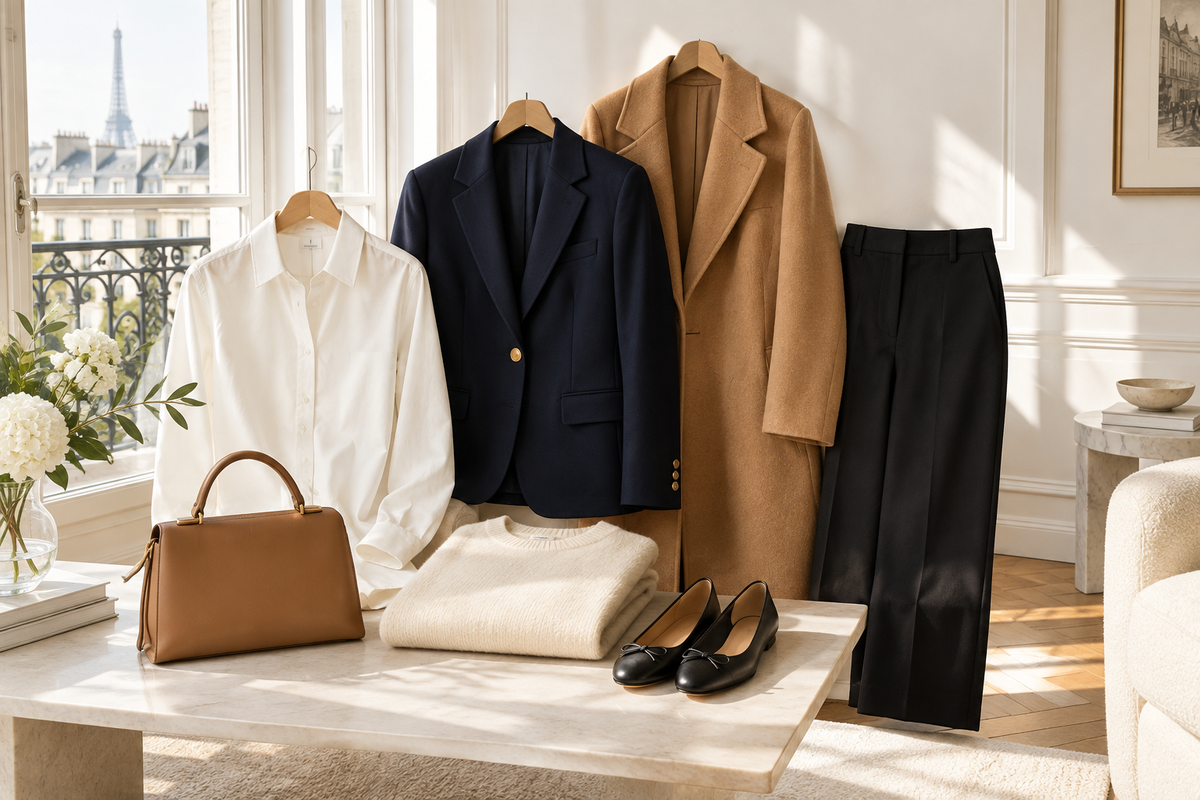
Choose two or three base colors already present in the clothes you wear most. Navy, ivory and tan form one option; black, grey and burgundy form another. If you prefer brighter clothing, your bases might be denim blue, cream and deep green. Neutrals are convenient, but they are not compulsory and they do not automatically look more expensive.
Add an accent only if you enjoy wearing it and can combine it with several existing pieces. Place the colors next to one another in daylight. Two items described as cream may have very different undertones, while navy and black can work beautifully together when the combination appears deliberate. Test the garments rather than relying on color names alone.
Use complexion advice as a suggestion, not a restriction. Hold a garment near your face in natural light and notice whether you like the effect. A favorite color can also appear in a skirt, bag or shoes if you prefer not to wear it near your face. Your comfort and taste are more useful than rigid warm-versus-cool rules.
Test the shape of the whole outfit
Silhouette compatibility matters as much as color. A long, full shirt may be easy over slim trousers but awkward under a closely fitted jacket. A wide-leg trouser can work with a relaxed top, but you may prefer a shorter hem or a partial tuck to define the outline. Neither combination is inherently correct; the test is whether you like it and can move comfortably.
Select one or two outfit shapes you already enjoy. For example, a close-fitting knit with a flowing skirt, or a relaxed shirt with straight trousers. Repeat those shapes with different colors and textures. This creates consistency without forcing you to dress identically every day, and it makes new purchases easier to evaluate.
Patterns can be part of a capsule. A striped shirt or printed dress can be highly usable when its colors relate to your layers and accessories. Treat the pattern as a complete design choice, not a problem to solve by buying several new coordinating items. If it only works with one outfit, decide whether that limited use is still worthwhile.
4. Build a flexible starter capsule
The following framework is a starting point for a wardrobe trial, not a requirement to buy fifteen new things. Substitute garments according to your climate, preferences and dress code. Existing clothes count fully. A well-used piece that is already in your wardrobe is usually the most budget-friendly starting point available.
Five tops with different jobs
Try two everyday tops, one shirt or blouse, one light knit and one slightly dressier top. Choose enough variety to cover your week without creating five unrelated styles. Check whether each can work with at least two bottoms. If you wear shirts almost daily, several shirts may serve you better than a theoretical balance of garment types.
Three bottoms you can rotate
Consider straight or wide-leg trousers, comfortable denim and a skirt or second pair of trousers. Choose cuts that work with your usual shoes. A trouser length that needs high heels may be unsuitable if you commute in flats. Think about waistband comfort, pockets and sitting for long periods, not only the standing mirror view.
Two dresses, if dresses suit your life
A practical day dress and a dress that can handle your typical social occasions may be enough for a trial. If you rarely wear dresses, replace these slots with more separates. If dresses are your daily uniform, reverse the balance and use fewer bottoms. The capsule exists to support your habits rather than to correct them.
Two layers and three useful shoe choices
A jacket or cardigan plus weather-appropriate outerwear gives you a basic layering structure. For shoes, start with a comfortable daily pair, an alternative for different weather, and a dressier option only if you need one. In some climates, rain protection matters more than a formal heel. In others, breathable footwear is the practical priority.
Before adding bags and jewelry, check what you already own. One bag that fits your daily belongings and one small option for outings may be sufficient. A belt is useful only when it actually improves fit or styling. Do not buy finishing pieces simply because a capsule checklist treats them as compulsory.
Lay out the selection and build complete outfits. Include coats, socks, underwear and bags in the test where they affect wearability. A wardrobe can look coherent on hangers while failing in practice because every top needs an unavailable layer. Resolve that dependency before shopping.
5. Turn your pieces into repeatable outfits

The working-day formula
Start with trousers, a shirt or knit, and comfortable shoes. Add a structured layer when your dress code or temperature requires it. Test the combination while seated and carrying your usual bag. If the shirt pulls at the buttons or the jacket restricts your arms, the outfit needs adjustment regardless of how polished it looks standing still.
The relaxed-day formula
Pair denim or comfortable trousers with a simple top and a cardigan or light jacket. The distinction between relaxed and careless often comes down to practical details: a clean shoe, a hem that does not drag, and clothes that fit without constant readjustment. There is no need to add formal accessories if they make the outfit feel unlike you.
The dinner formula
Use a dress or your most comfortable polished separates as the base. Change one or two elements, perhaps a smaller bag and earrings, rather than adding several competing focal points. If you will walk between venues, choose shoes for that reality. An evening outfit is more successful when you can enjoy the occasion instead of managing discomfort.
The three-outfit purchase test
Before buying a new garment, identify three complete outfits using clothes you already have. Name the exact pieces rather than assuming “it will go with everything.” If each outfit requires an additional purchase, the new item may be starting another wardrobe rather than joining your current one. Occasionwear can be an exception, but that exception should be deliberate.
Save outfit photographs in a simple phone album. Note the weather and any comfort issues after wearing each combination. Repeating a successful outfit is not a style failure; it is evidence that your wardrobe is doing its job. Small adjustments to a tuck, sleeve, layer or accessory can provide variety without expanding the collection.
6. Set a realistic budget and purchase order
Decide the total before browsing
Set a limit that includes alterations, care and any unavoidable delivery costs, not just garment prices. For an illustrative $300 wardrobe refresh, you might reserve $60 for repairs or alterations, $180 for one or two high-priority gaps and $60 for a useful second purchase or contingency. These are planning figures, not KIMLUD prices or a promise that particular items will fit that allowance.
If the budget is smaller, reduce the scope rather than lowering every standard. A single useful purchase and a repaired favorite can improve your wardrobe more than several compromises. You can also begin without buying anything: select a coherent trial capsule, photograph outfits and learn which gap affects you most frequently.
Buy in order of repeated usefulness
Prioritize the problem that appears most often. If you lack comfortable everyday shoes, that issue may outweigh a beautiful coat. If all your work trousers are worn out, start there. A general instruction to spend most on bags or outerwear ignores individual needs. Your calendar and existing wardrobe should determine the order.
Cost per wear is a useful estimate, not a guarantee. Divide total ownership cost by realistic expected wears. A $120 item worn forty times has a purchase cost of $3 per wear, before other costs. A $40 item worn twice costs $20 per wear. The calculation is helpful only when your wear estimate is credible; do not assume frequent use just to justify a purchase.
Use discounts carefully
A reduced price does not turn an unsuitable item into a good decision. Check size, care requirements, delivery terms and return conditions before treating a sale as an opportunity. Do not rely on an imagined future weight change or a complicated alteration. A discount is relevant only after the garment has passed your fit and compatibility tests.
Keep a short waiting list for nonessential purchases. Revisit it after wearing your trial capsule for a week. If you still need the item, you will have better evidence about its intended role. If the desire disappears, your budget remains available for a genuine gap. Avoid buying several near-duplicates merely because each seems inexpensive individually.
7. Check fit, fabric and construction
Read measurements rather than relying on size labels
Compare the relevant size chart with your own measurements and, where possible, a similar garment that fits you well. Clarify whether a chart describes body measurements or finished garment measurements. Ease, stretch and intended silhouette affect the result, so the same letter size across products does not necessarily imply the same fit.
For tops and jackets, check shoulder placement, arm movement, bust room and sleeve length. For trousers and skirts, inspect waist comfort, hip room, rise and movement when sitting. For dresses, consider where the waist seam falls, whether the skirt allows your normal stride, and whether the neckline stays comfortable when you bend or reach.
Assess fabric for its intended job
Natural fibers are not automatically superior, and synthetics are not automatically unsuitable. Fiber content, fabric construction, finishing and care all influence performance. A structured fabric may suit tailoring, while a flexible knit may suit a close-fitting dress. Choose according to how you will wear and maintain the item rather than making a blanket judgment from a material name.
Check opacity in bright light, especially for pale clothing. Consider whether the surface catches easily on jewelry, whether the garment requires a lining or slip, and whether its care instructions fit your routine. A piece that needs more maintenance than you can realistically provide may spend too much time unworn to serve your capsule.
Inspect the details that affect use
When the item arrives, look at seams, closures, hems and any lining. Try zips and buttons gently, check that seams lie comfortably, and inspect the garment before removing labels or making alterations. Do not assume a product photo proves durability or softness. Those qualities require actual use and care over time.
If the fit is almost right, ask whether a straightforward adjustment would solve it. A hem change can be sensible; rebuilding the shape of a garment may not be. Include the alteration quote in your budget comparison. If the piece needs several changes or still does not feel comfortable, reconsider rather than trying to rescue a purchase at any cost.
8. Choose dresses and accessories purposefully
A dress can simplify dressing because the main outfit is already coordinated, but it still needs to work with your shoes, underwear and outerwear. Choose a neckline and sleeve arrangement you enjoy wearing, a hem suited to your activities, and a fabric appropriate for your climate. Neither midi length nor black is universally the best answer.
For a versatile dress, test it with your daytime shoes, your preferred layer and one social-occasion accessory combination. A simple shape often provides flexibility, but a printed dress can be equally practical if its colors work with your existing pieces. If you want a neutral starting point, browse KIMLUD black dresses; for a wider range of shapes, explore all women's dresses.
Accessories should solve a practical or styling need. Check that a daily bag fits your belongings and that its strap is comfortable when loaded. Consider whether your preferred jewelry catches on delicate fabric. Choose shoes based on your actual walking and standing time. A capsule does not require a tote, crossbody and clutch if only one of those shapes suits your routine.
Use contrast deliberately. A soft dress with a structured jacket can create a clear silhouette, while tonal accessories can keep an outfit visually quiet. You do not need to match every metal or leather tone exactly. The goal is a combination you like, not compliance with a rule that forces additional purchases.
9. Adapt for seasons and maintain your clothes
Think in terms of an active seasonal wardrobe rather than expecting every garment to work throughout the year. Keep compatible colors across seasons where useful, but change fabrics, layers and footwear for real conditions. A lightweight dress is not necessarily a winter staple simply because you can add a coat in a photograph.
In warmer weather, prioritize breathable comfort, appropriate coverage and footwear that suits your day. In colder weather, check whether your outerwear comfortably fits over the layers you need. Rain, wind and walking conditions may determine shoe choices more strongly than styling preferences. Your climate sets the practical boundaries.
Follow each garment's care label. Do not apply a universal washing temperature or drying method across different fabrics. Treat stains promptly using an appropriate method, protect delicate pieces as directed, and avoid unnecessary heat. If professional cleaning is required, account for that cost before purchasing rather than discovering it after the first wear.
Keep a small maintenance routine: check buttons and hems, clean shoes appropriately, store garments dry, and address minor repairs before they worsen. Rotate frequently worn pieces when possible. Good care cannot guarantee a lifespan, but it can help prevent avoidable damage and make the clothes you already own more pleasant to wear.
10. Follow a four-week wardrobe plan
In week one, audit your wardrobe and select a trial capsule. Make outfits from what you already own, record the most frequent frustrations, and avoid shopping immediately. The purpose is to observe, not to create a perfect-looking wardrobe overnight.
In week two, wear the selection through normal activities. Photograph useful combinations and note laundry bottlenecks, temperature issues and fit problems. Obtain repair or alteration quotes for items worth keeping. At the end of the week, choose one gap that would make the greatest practical difference.
In week three, research that single gap against your written requirements. Compare measurements, fabric information, care and total cost. Apply the three-outfit test before committing. If no suitable option fits your budget, wait or revise the plan; buying the wrong substitute does not resolve the original need.
In week four, assess any new or repaired item alongside your existing outfits. Did it make dressing easier? Are you using it as expected? Adjust your capsule based on that evidence. Keep the working outfits, release unrealistic assumptions, and plan the next purchase only when another clear need appears.
11. Frequently asked questions
How many items should a capsule wardrobe contain?
Enough to cover your routine, laundry cycle and climate without persistent gaps. Begin with a manageable trial selection rather than a universal number. Add items when repeated use shows a need, not simply to reach a target count.
Can I build a capsule without buying anything?
Yes. Select compatible pieces from your wardrobe and assemble complete outfits. Repairs, new combinations and better organization may be enough to improve your daily dressing before you make a purchase.
Does a luxury-looking wardrobe need natural fibers?
No. Judge the garment's fit, construction, comfort, appearance and care requirements together. Fiber content is useful information, but it does not independently establish quality, durability or suitability.
Can a capsule include prints and bright colors?
Absolutely. Choose colors you enjoy and test them with your existing garments. Repeating a few compatible tones or outfit shapes can provide coherence without requiring a neutral-only wardrobe.
What should I buy first on a limited budget?
The item that resolves your most frequent practical gap. That may be comfortable shoes, a replacement work bottom or a washable top. Identify the need through a wardrobe trial before setting your purchase order.
Should I remove all my occasionwear?
No. Keep useful clothing for genuine occasions even if you wear it infrequently. You can maintain a separate occasionwear selection rather than forcing every garment into your everyday capsule.
How do I know whether an item is versatile?
Build three realistic complete outfits using pieces you already own. Include shoes and layers. If the combinations are comfortable and appropriate for your routine, the item has a clearer role than one that requires several additional purchases.
12. Your next wardrobe decision
A polished capsule begins with attention, not a large shopping budget. Identify what you genuinely wear, choose compatible outfit structures, and resolve the gaps that interrupt your routine. Fit, comfort and care should guide the plan alongside appearance.
Start today by assembling three complete outfits from your existing wardrobe. Photograph them, wear them, and write down what would improve each one. That short exercise gives your next purchase a clear purpose. When a dress is the genuine missing piece, explore KIMLUD's women's dresses with your measurements, palette and intended occasions already in mind.
13. Sources & References
KIMLUD pleated shirt and wide-leg pants set: product listing and imagery for the featured styling starting point.
KIMLUD all women's dresses and KIMLUD black dresses: shopping destinations referenced in the dress-selection guidance.


Leave a comment
This site is protected by hCaptcha and the hCaptcha Privacy Policy and Terms of Service apply.