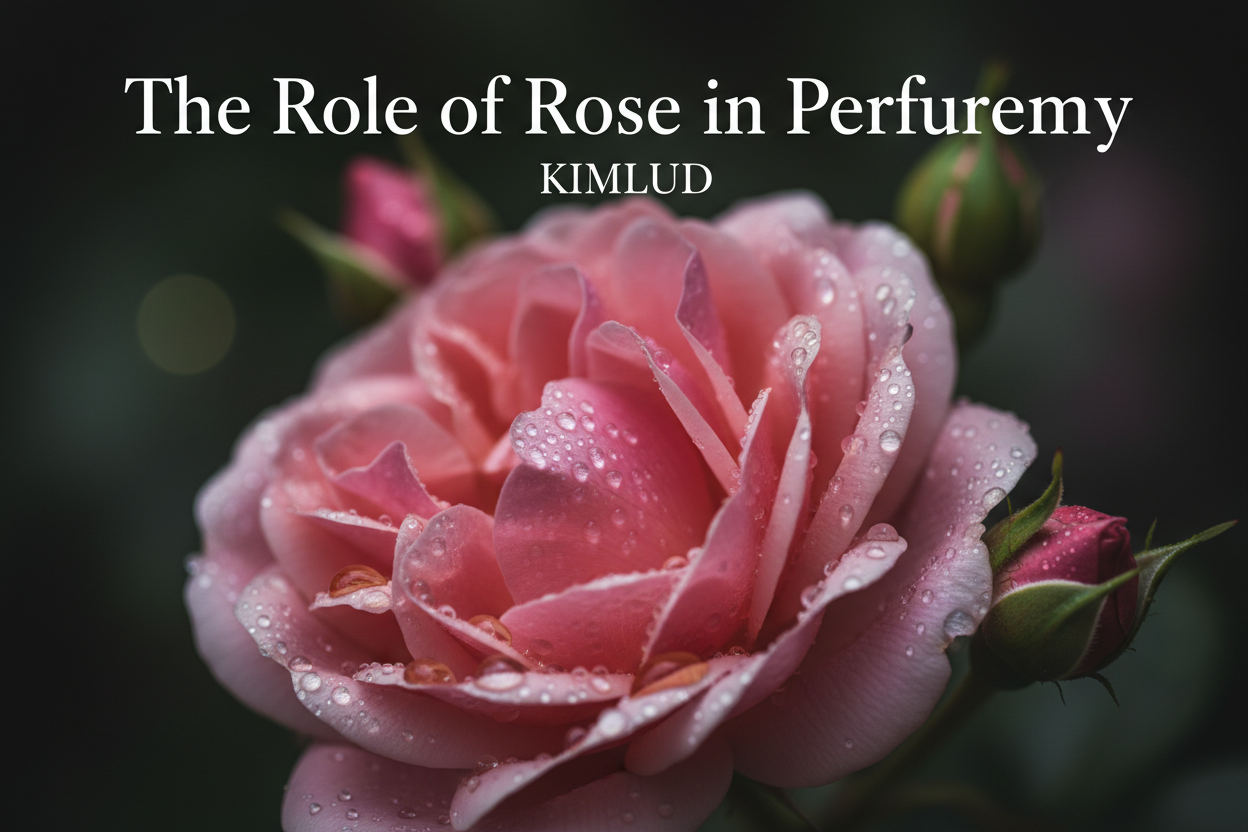
The Role of Rose in Perfumery Through History
The Role of Rose in Perfumery Through History
No flower has shaped the history of perfumery more profoundly than the rose. Discover its 5,000-year journey from ancient temples to modern luxury.
Explore KIMLUD FragrancesTable of Contents
- The Rose in Ancient Civilizations
- Rosa Damascena: The Queen of Flowers
- The Discovery of Rose Water
- Rose Absolute and Rose Otto
- The World's Great Rose-Growing Regions
- Rose in Modern Perfumery
- Classic Rose Pairings in Perfumery
- The Taif Rose: Arabia's Treasure
- Rose Symbolism Across Cultures
- Frequently Asked Questions
The Rose in Ancient Civilizations
The rose has been cultivated for its fragrance for at least 5,000 years, making it one of the oldest and most continuously celebrated flowers in human history. Archaeological evidence of rose cultivation has been found in ancient China, Persia, Egypt, Greece, and Rome, and the flower appears in some of the earliest written records of human civilization.
In ancient Egypt, roses were used in religious ceremonies, placed in tombs as offerings to the gods, and used to produce fragrant oils for personal use. Garlands of roses have been found preserved in Egyptian tombs dating to approximately 170 CE, and rose petals have been identified in the floral offerings discovered in the tomb of Tutankhamun. The Egyptian goddess Isis was associated with the rose, and the flower was used in rituals dedicated to her worship.
In ancient Greece, the rose was sacred to Aphrodite, the goddess of love and beauty. The poet Sappho, writing in the 7th century BCE, called the rose the queen of flowers — a title it has never relinquished. Greek physicians, including Hippocrates and Dioscorides, documented the medicinal uses of rose oil and rose water, and rose petals were used to produce fragrant oils that were traded across the Mediterranean world.
In ancient Rome, the rose reached perhaps its greatest cultural prominence. Romans used roses with extraordinary extravagance — rose petals were strewn on floors at banquets, floated in wine, used to fill pillows and mattresses, and worn as garlands at celebrations. The Roman Emperor Nero is said to have spent the equivalent of millions of dollars on roses for a single banquet, with petals falling from the ceiling in such quantities that several guests reportedly suffocated. Rose oil was one of the most valuable commodities in the Roman luxury trade, imported from Egypt, Persia, and the eastern Mediterranean.
Rosa Damascena: The Queen of Flowers
Of the hundreds of rose species and thousands of cultivated varieties, one stands above all others in the history of perfumery: Rosa damascena, the Damask rose. Named for the city of Damascus in Syria, where it was widely cultivated in the medieval period, Rosa damascena is the primary source of rose oil and rose water used in perfumery worldwide.
Rosa damascena is a complex hybrid rose, believed to have originated in the Middle East through the natural crossing of several wild rose species. It is characterized by its large, intensely fragrant flowers, which range in color from pale pink to deep rose. The fragrance of Rosa damascena is extraordinarily complex — rich, honeyed, and multi-layered, with facets of fruit, spice, and green freshness that no synthetic rose accord has ever fully replicated.
The Damask rose blooms just once a year, for a brief window of two to four weeks in late spring. During this period, the flowers must be harvested by hand in the early morning hours before sunrise, when the concentration of aromatic compounds is at its peak. As the day warms and the sun rises, the volatile aromatic molecules begin to evaporate, reducing the quality and yield of the extracted oil. This extreme sensitivity to time and temperature is one of the reasons why genuine rose oil is so extraordinarily expensive.
The Discovery of Rose Water
The production of rose water through steam distillation is one of the most important developments in the history of perfumery. While aromatic rose preparations had been produced for thousands of years through cold enfleurage and maceration, the development of true steam-distilled rose water required advances in distillation technology that came during the Islamic Golden Age.
The Persian polymath Avicenna (Ibn Sina, 980–1037 CE) is widely credited with producing the first true steam-distilled rose water, using his refined alembic still. Avicenna's rose water was of unprecedented purity and aromatic intensity, and it quickly became one of the most important fragrance and culinary ingredients in the Islamic world. Rose water was used to perfume mosques, to scent the hands of guests at formal occasions, to flavor food and drink, and as a component in traditional medicine.
From the Islamic world, rose water spread to Europe through the Crusades and the spice trade, becoming one of the most prized luxury imports of medieval Europe. By the 14th century, rose water was being produced in Hungary, France, and other European countries, and it remained one of the most important fragrance ingredients in European perfumery until the development of synthetic aromatic molecules in the late 19th century.
Rose Absolute and Rose Otto
Two distinct forms of rose extract are used in modern perfumery, each with a different character and production method.
| Feature | Rose Otto (Rose Essential Oil) | Rose Absolute |
|---|---|---|
| Extraction method | Steam distillation | Solvent extraction |
| Appearance | Pale yellow, semi-solid at room temperature | Deep orange-red, liquid |
| Scent character | Fresh, light, slightly waxy, true rose | Rich, deep, honeyed, more complex |
| Yield | Extremely low (3-5 tonnes petals per kg oil) | Higher than otto |
| Price | Among the most expensive essential oils | Expensive but less than otto |
| Use in perfumery | Fine fragrance, natural perfumery | Fine fragrance, cosmetics |
| Primary sources | Bulgaria, Turkey, Iran | Morocco, France, Egypt |
The World's Great Rose-Growing Regions
| Region | Country | Rose Variety | Character | Primary Product |
|---|---|---|---|---|
| Rose Valley (Kazanlak) | Bulgaria | Rosa damascena | Fresh, light, classic rose | Rose otto, rose water |
| Isparta | Turkey | Rosa damascena | Rich, slightly spicy | Rose otto, rose absolute |
| Taif | Saudi Arabia | Rosa damascena | Honeyed, rich, slightly spicy | Rose oil, rose water |
| Grasse | France | Rosa centifolia (Cabbage rose) | Soft, powdery, delicate | Rose absolute, concrete |
| Kelaat M'Gouna | Morocco | Rosa damascena | Fruity, fresh, slightly green | Rose absolute, rose water |
| Kashan | Iran | Rosa damascena | Deep, rich, complex | Rose water, rose oil |
Rose in Modern Perfumery
In contemporary perfumery, rose is the single most important floral ingredient, appearing in an estimated 75% of all women's fragrances and a significant proportion of men's fragrances. Its versatility is extraordinary — rose can function as a top note, a heart note, or a base note depending on how it is used; it can be fresh and dewy or rich and opulent; it can be the dominant theme of a fragrance or a subtle supporting element that adds depth and complexity.
Some of the world's most celebrated fragrances are built around rose: Chanel No. 5 (which uses Grasse rose absolute as a key ingredient), Dior Miss Dior, Yves Saint Laurent Paris, Guerlain Nahema, and countless others. In niche perfumery, rose has experienced a renaissance in recent decades, with perfumers exploring its full complexity in compositions that range from hyper-realistic rose soliflores to avant-garde interpretations that use rose as a structural element rather than a simple floral note.
Classic Rose Pairings in Perfumery
| Pairing | Character | Famous Examples |
|---|---|---|
| Rose + Oud | Rich, opulent, deeply oriental | Classic Arabian perfumery, Tom Ford Rose Prick |
| Rose + Sandalwood | Creamy, warm, sensual | Guerlain Nahema, many oriental roses |
| Rose + Patchouli | Earthy, dark, complex | Yves Saint Laurent Paris, many chypre roses |
| Rose + Musk | Soft, skin-like, intimate | Many modern rose fragrances |
| Rose + Iris | Powdery, elegant, refined | Chanel No. 5, many classic florals |
| Rose + Citrus | Fresh, bright, modern | Many contemporary rose EDTs |
| Rose + Amber | Warm, resinous, enveloping | Oriental rose compositions |
The Taif Rose: Arabia's Treasure
Among all the world's rose-growing regions, Taif in Saudi Arabia holds a special place in the history of perfumery. The Taif rose — a variety of Rosa damascena cultivated in the mountains around the city of Taif at approximately 1,800 meters above sea level — is considered by many connoisseurs to be the finest rose in the world for perfumery purposes.
The Taif rose season lasts just three to four weeks each year, typically in March and April. During this brief window, thousands of workers harvest the roses by hand before sunrise. It takes approximately 10,000 Taif roses to produce just one tola (approximately 12ml) of rose oil. The resulting oil has a character that is distinctly different from Bulgarian or Turkish rose otto — richer, more honeyed, with a slight spicy warmth that reflects the unique terroir of the Taif mountains.
Taif rose oil is one of the most expensive fragrance ingredients in the world, and it is central to the Arabian perfumery tradition. It is used in the finest Arabian attars and perfumes, and it is a key ingredient in the compositions of luxury Arabian fragrance houses including Amouage and Abdul Samad Al Qurashi.
Rose Symbolism Across Cultures
The rose is the most symbolically rich flower in human culture, carrying layers of meaning that have accumulated over thousands of years across multiple civilizations.
- Love and beauty: In Western culture, the red rose is the universal symbol of romantic love, a meaning rooted in its association with Aphrodite/Venus in ancient Greek and Roman mythology.
- Spirituality: In Islamic culture, the rose is associated with the Prophet Muhammad and with divine beauty. In Christian mysticism, the rose is associated with the Virgin Mary and with paradise.
- Secrecy: The Latin phrase sub rosa (under the rose) has signified confidentiality since ancient Rome.
- Royalty: The rose has been a symbol of royalty across many cultures, from the Wars of the Roses in medieval England to the rose gardens of Mughal emperors.
- Healing: In traditional medicine across cultures, rose has been used to treat everything from digestive complaints to depression, and modern research has confirmed several of its therapeutic properties.
Frequently Asked Questions
Why is rose oil so expensive?
Rose oil is expensive because it takes 3 to 5 metric tonnes of rose petals — approximately 3 to 5 million flowers — to produce just one kilogram of rose otto essential oil. The flowers must be harvested by hand in the early morning, and the harvest season lasts only a few weeks per year.
What is the difference between rose otto and rose absolute?
Rose otto is produced by steam distillation and has a fresh, light, true rose character. Rose absolute is produced by solvent extraction and has a richer, deeper, more complex scent. Both are used extensively in fine fragrance.
What is Rosa damascena?
Rosa damascena, the Damask rose, is the primary rose species used in perfumery worldwide. Named for Damascus, Syria, it is cultivated in Bulgaria, Turkey, Saudi Arabia, Morocco, Iran, and other regions for its extraordinarily fragrant flowers.
Which rose is considered the finest for perfumery?
Many connoisseurs consider the Taif rose from Saudi Arabia to be the finest rose for perfumery, followed closely by Bulgarian rose otto from the Kazanlak Valley. Each has a distinct character that reflects its unique growing conditions.
What fragrances are famous for their rose note?
Famous rose fragrances include Chanel No. 5, Dior Miss Dior, Yves Saint Laurent Paris, Guerlain Nahema, and countless Arabian oud-rose compositions. Rose appears in an estimated 75% of all women's fragrances.